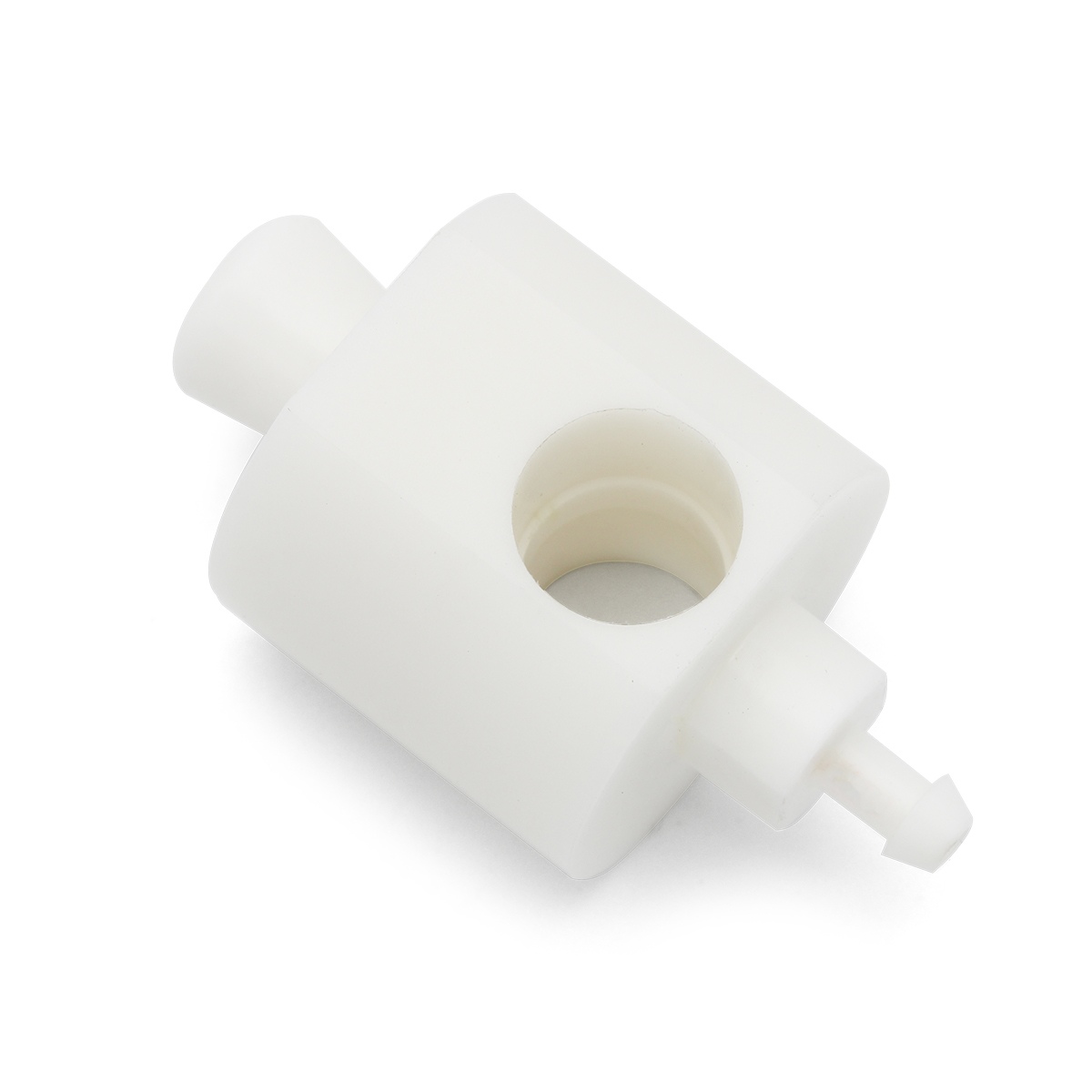


CNC Precision Plastic Parts are high-accuracy components manufactured from engineering plastics using advanced CNC machining technology. Compared with conventional plastic processing methods, CNC precision plastic machining can produce complex geometries, tight tolerances, and customized dimensions directly from plastic sheets, rods, blocks, or other stock Materials.
Our CNC Precision Plastic Parts can be manufactured according to 2D drawings, 3D CAD files, samples, or specific application requirements. We provide customized precision plastic machining for prototypes, small batches, and volume production, serving industries such as automation, electronics, medical equipment, automotive, semiconductor, and industrial machinery.
CNC Precision Plastic Parts are custom plastic components manufactured using computer numerical control (CNC) machining processes.
During CNC machining, cutting tools precisely remove material from a plastic workpiece to achieve the required dimensions and geometry. Depending on the design, CNC Milling, CNC Turning, drilling, tapping, and other machining operations can be used.
Common CNC machined plastic parts include:
Plastic brackets
Bushings
Gears
Rollers
Spacers
Insulators
Housings
Covers
Seals and guides
Custom mechanical components
Different engineering plastics can be selected according to mechanical, thermal, chemical, and electrical requirements.
POM, also known as acetal, offers low friction, good wear resistance, excellent machinability, and dimensional stability.
POM CNC machining is commonly used for:
Gears
Bushings
Rollers
Guide components
Sliding parts
PEEK is a high-performance engineering plastic known for excellent temperature resistance, chemical resistance, mechanical strength, and dimensional stability.
PEEK CNC machining is suitable for demanding industrial, medical, aerospace, and semiconductor applications.
PTFE provides excellent chemical resistance and an extremely low coefficient of friction. It is commonly machined into seals, bushings, insulators, and other specialized components.
Nylon provides a combination of strength, toughness, wear resistance, and relatively low weight. It is suitable for many mechanical and industrial applications.
Polycarbonate offers high impact resistance and good dimensional stability, making it suitable for protective covers, housings, and transparent or semi-transparent components.
ABS is a cost-effective engineering plastic that is easy to machine and suitable for prototypes, housings, covers, and general-purpose components.
CNC plastic milling uses rotating cutting tools to remove material from plastic stock.
It is suitable for producing components with:
Holes
Slots
Pockets
Flat surfaces
Curved surfaces
Complex geometries
CNC turning is suitable for cylindrical and rotational plastic components.
Typical parts include:
Bushings
Rings
Rollers
Spacers
Shafts
Cylindrical connectors
Precision drilling creates accurate holes in plastic components for assembly and fastening.
CNC tapping can create internal threads for screws, bolts, and other fastening components.
Computer-controlled machining provides precise control over dimensions and helps produce consistent components.
Precision plastic CNC machining can manufacture complex shapes that may be difficult to achieve using conventional cutting methods.
Engineering plastics such as POM, PEEK, and nylon can provide excellent wear performance for moving mechanical components.
Plastic components are generally lighter than metal parts, which can help reduce overall equipment weight.
Many engineering plastics provide good electrical insulation properties, making them suitable for electrical and electronic components.
Unlike many metal components, plastic parts do not rust and can provide excellent resistance to many chemicals and corrosive environments.
CNC precision plastic components are widely used in industrial equipment for:
Gears
Bushings
Rollers
Guides
Spacers
Fixtures
Precision plastic parts are commonly used in automated machinery because of their lightweight construction, low friction, and wear resistance.
Applications include:
Robotic systems
Conveyor equipment
Automated assembly machines
Positioning systems
CNC plastic components can provide electrical insulation and mechanical protection for electronic devices.
Typical applications include:
Insulating components
Connectors
Housings
Mounting brackets
Protective covers
Selected engineering plastics can be machined into precision components for medical and laboratory equipment, depending on material and regulatory requirements.
High-performance plastics such as PEEK and PTFE can be used for specialized semiconductor equipment components where chemical resistance, dimensional stability, and low particle generation are important.
CNC plastic parts can be used for automotive fixtures, bushings, guides, covers, spacers, and other customized components.
CNC machining does not require injection molds, making it suitable for producing functional prototypes quickly.
Parts can be customized according to:
Dimensions
Material
Shape
Color
Tolerance
Surface finish
Quantity
For low-volume orders, CNC plastic machining can be more practical than tooling-based manufacturing methods.
CNC equipment uses digital machining programs to maintain repeatability between parts and production batches.
Because the parts are machined directly from plastic stock material, no dedicated injection mold is required.
| Item | Custom Options |
|---|---|
| Material | POM, PEEK, PTFE, Nylon, PC, ABS, PP, PVC, etc. |
| Machining Process | CNC Milling, CNC Turning, Drilling, Tapping |
| Part Size | Customized |
| Shape | Custom according to drawing |
| Color | Natural, Black, White, Custom |
| Tolerance | According to drawing and application requirements |
| Surface Finish | CNC Machined or Customized |
| Production Volume | Prototype, Small Batch, Mass Production |
| Drawing Format | 2D Drawing, 3D CAD, Sample |
Actual material selection, tolerance, and machining capability depend on the part design and application requirements.
Customers can provide 2D engineering drawings, 3D CAD models, or physical samples.
Choose the appropriate material according to mechanical strength, temperature, chemical resistance, friction, electrical insulation, and other requirements.
Important specifications may include:
Dimensions
Tolerances
Thread specifications
Hole sizes
Surface finish
Color
Quantity
After reviewing the design, prototypes can be produced for testing before moving to small-batch or volume production.
We provide CNC Precision Plastic Parts manufactured according to customer drawings and application requirements. Our CNC machining capabilities support a wide range of engineering plastics and different production volumes.
Our services include:
Custom CNC plastic machining
Precision plastic parts
CNC plastic milling
CNC plastic turning
Plastic prototyping
Small-batch CNC machining
Custom engineering plastic components
High-performance plastic machining
Whether you need a single prototype, replacement component, or production batch, our CNC Precision Plastic Machining Service can provide customized manufacturing solutions.
CNC Precision Plastic Parts are customized plastic components manufactured using CNC machining processes to achieve accurate dimensions, complex geometries, and consistent quality.
Common CNC machining plastics include POM, PEEK, PTFE, nylon, PC, ABS, PP, PVC, and other engineering plastics.
The best material depends on the application. POM is suitable for low-friction mechanical parts, while PEEK is better suited to demanding high-temperature and chemical environments.
Yes. Custom CNC plastic parts can be manufactured according to drawings, CAD files, samples, dimensions, tolerances, materials, colors, and production quantities.
Yes. CNC machining is particularly suitable for plastic prototypes because parts can be produced directly from stock material without creating an injection mold.
CNC precision plastic parts are widely used in industrial machinery, automation, electronics, medical equipment, semiconductor equipment, automotive systems, and other precision applications.

JIESHENG HARDWARE is a professional manufacturer that focuses on customizing High- Precision Hardware Spare Parts more than 20 years of experience.
Copyright © 2026 Dongguan Jiesheng Hardware Industry Co., Ltd. All rights reserved. Privacy Policy


 English
