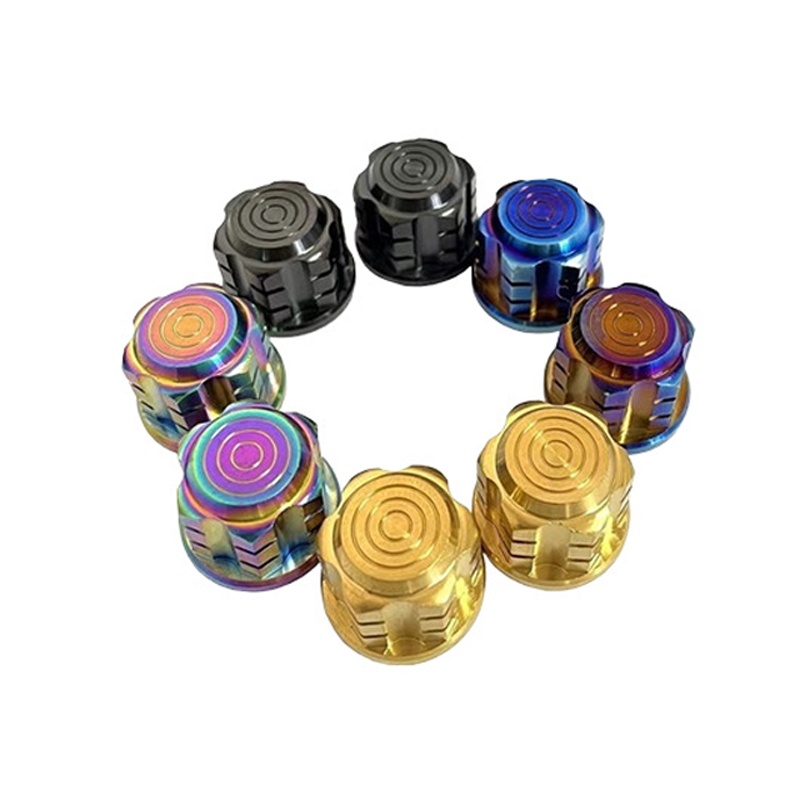


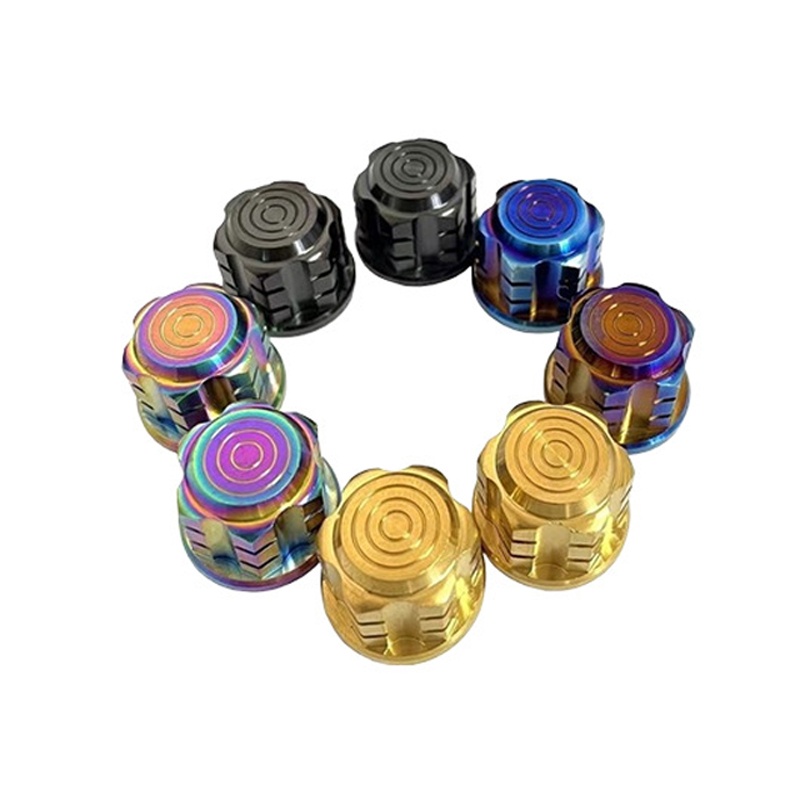
CNC Titanium Parts are high-precision components manufactured from titanium alloys using advanced Computer Numerical Control (CNC) machining processes. These parts are known for their exceptional strength-to-weight ratio, outstanding corrosion resistance, thermal stability, and biocompatibility, making them essential in aerospace, Medical, marine, chemical, and high-performance automotive industries.
Among various machining technologies, EDM (Electrical Discharge Machining) Titanium Components play a critical role in fabricating intricate or hard-to-machine shapes, particularly when standard CNC cutting methods are limited by titanium’s low thermal conductivity and high chemical reactivity.
High Strength-to-Weight Ratio
Titanium alloys such as Grade 5 (Ti-6Al-4V) exhibit tensile strengths between 900–1,100 MPa, while being 45% lighter than steel, providing ideal performance in weight-sensitive environments.
Corrosion Resistance
A natural TiO₂ passive oxide layer ensures corrosion resistance even in seawater (corrosion rate <0.001 mm/year) and acidic environments (HCl up to 5% at 35°C).
Biocompatibility
Titanium grades like CP Grade 2 and Grade 23 (ELI) are widely approved for Medical implants due to their non-toxicity, osseo-integration, and autoclave compatibility.
Thermal Stability
Titanium components retain structural integrity at elevated temperatures, with some parts tolerating up to 600°C (1,112°F), ideal for aerospace engine components.
Low Thermal Expansion
With a coefficient of 8.6 × 10⁻⁶/°C, titanium exhibits lower thermal distortion compared to steel, making it suitable for precision machining applications.
EDM Machining Titanium Components allow for:
Manufacturing of deep, narrow cavities, micro-holes, and sharp internal corners
Minimal residual stress due to non-contact material removal
High dimensional accuracy for hard titanium alloys where traditional CNC tools wear quickly
Use in high-precision titanium tooling, implants, and aerospace brackets
EDM complements traditional CNC turning and 5-axis titanium milling, offering a complete solution for complex titanium component fabrication.
Titanium CNC Parts for Aerospace represent up to 20% of modern aircraft structures
Applications include:
Fan blades and compressor disks operating at 540°C
Airframe elements with fatigue strength >500 MPa at 10⁷ cycles
Fasteners and fittings with shear strength >550 MPa
The medical titanium market is projected to reach $5.3B by 2027
Key applications:
Orthopedic implants (hip stems, bone plates) with modulus close to bone (110 GPa)
Dental implants with >95% 10-year success rate
Surgical tools requiring repeated sterilization at 134°C
Chemical processing equipment: Resists acid corrosion (e.g. HCl at 5%)
Marine components: Seawater corrosion rate <0.0005 mm/year
Automotive parts: Titanium connecting rods and valves offer 30–40% weight reduction
Use pH-neutral cleaners (pH 6–8) to protect the oxide layer
For medical titanium CNC parts, use ultrasonic cleaning at 40 kHz with enzymatic solution
Avoid chloride cleaners (>50 ppm may cause stress corrosion cracking)
Apply dry film lubricants (e.g. MoS₂) to moving parts, reducing friction to 0.04
Use anodizing for oxide layers 0.5–25 μm to improve wear resistance
In marine titanium components, apply cathodic protection between -0.80 to -1.05 V (SCE)
Perform liquid penetrant inspection to detect cracks >0.1 mm
Use eddy current testing (100 kHz–6 MHz) for surface/subsurface flaws
Monitor fatigue-prone parts with strain gauges (accuracy ±1 με)
Maintain humidity <40% to avoid hydrogen embrittlement
Keep temperatures between 15–30°C (59–86°F)
Use VCI (Vapor Corrosion Inhibitor) packaging with emission rates of 10–50 mg/m²/day
We are a trusted OEM supplier of custom CNC titanium parts with the following strengths:
Grade 2, Grade 5, Grade 23 titanium alloys supported
EDM machining capabilities for fine-featured titanium components
±0.005 mm tolerance, Ra ≤ 0.8 μm surface finish
In-house CMM inspection, ultrasonic testing, and material certification
Export experience in aerospace, medical, and marine sectors
Q1: What makes EDM ideal for titanium?
A: Titanium is hard and reactive, making traditional machining difficult. EDM machining removes material without contact, enabling precision titanium parts with complex internal geometries.
Q2: What surface finishes can you provide for titanium components?
A: We offer anodizing, polishing, passivation, bead blasting, and MoS₂ coating based on your functional or aesthetic needs.
Q3: Do you offer small-batch CNC titanium prototyping?
A: Yes, we support both rapid prototyping and mass production of custom CNC titanium parts.
Q4: Which titanium grades do you work with?
A: We machine Grade 2, Grade 5 (Ti-6Al-4V), and Grade 23 (Ti-6Al-4V ELI), depending on strength, corrosion resistance, or biocompatibility needs.
Q5: Can you provide full testing and documentation?
A: Absolutely. We provide CMM reports, material traceability, dimensional inspection, and non-destructive testing (NDT) results.

JIESHENG HARDWARE is a professional manufacturer that focuses on customizing High- Precision Hardware Spare Parts more than 20 years of experience.
Copyright © 2026 Dongguan Jiesheng Hardware Industrial Co., Ltd. All rights reserved. Privacy Policy


 English
