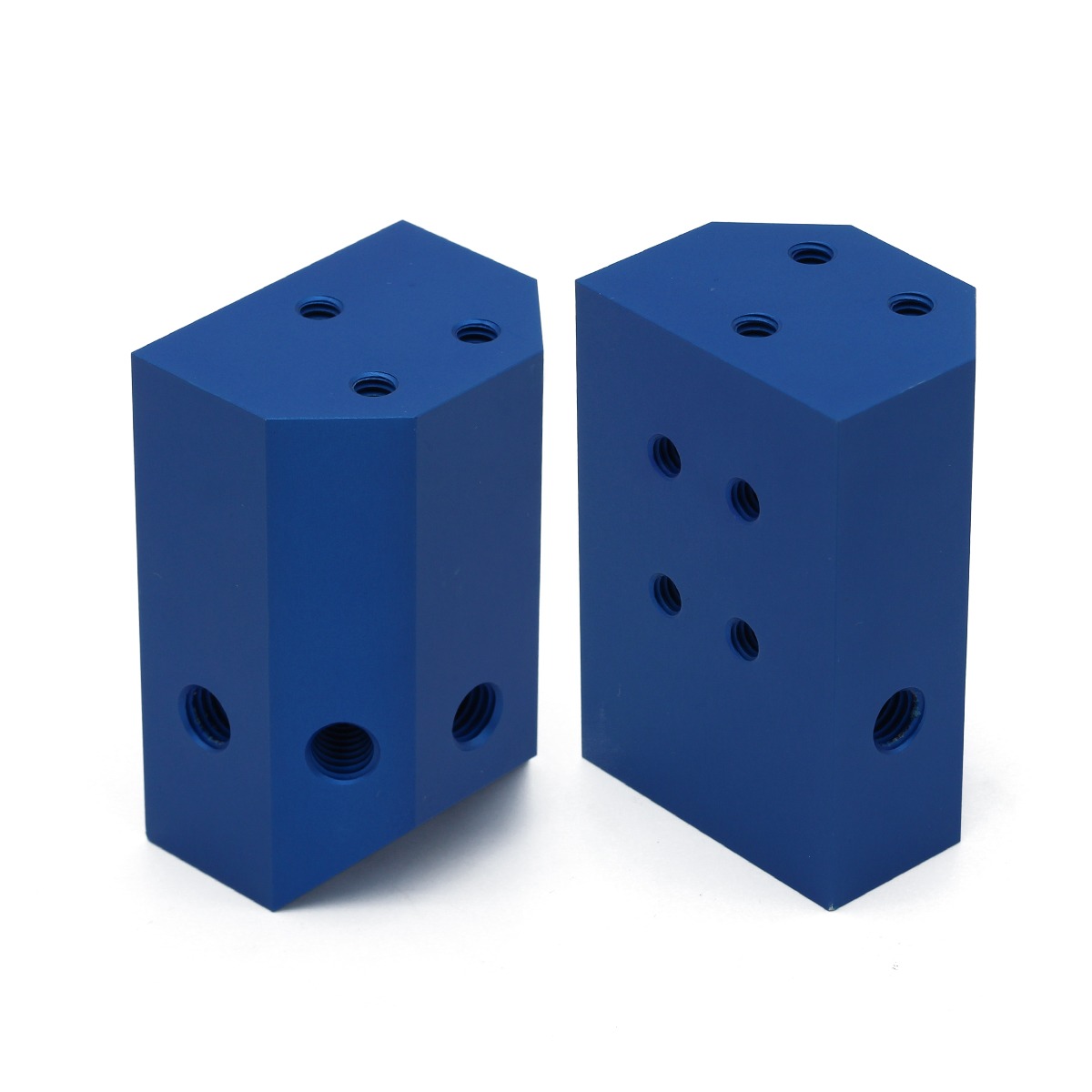


Aluminum CNC Machining is a precision manufacturing process that uses Computer Numerical Control (CNC) technology to cut, shape, and finish aluminum Materials into customized components with high accuracy and excellent surface quality.
Due to its lightweight, high strength-to-weight ratio, corrosion resistance, and excellent machinability, aluminum has become one of the most popular materials for CNC Machining. Aluminum CNC machining is widely used in industries such as aerospace, automotive, electronics, medical equipment, industrial automation, and consumer products.
With advanced CNC milling, CNC turning, and multi-axis machining technology, manufacturers can produce complex CNC aluminum parts with tight tolerances, consistent quality, and fast production efficiency.
Aluminum CNC machining is a subtractive manufacturing process that uses computer-controlled machine tools to remove material from aluminum blocks, plates, or bars to create precision components.
The machining process starts with a digital CAD model, which is converted into CNC machine instructions. The CNC machine then controls cutting tools to perform operations such as milling, drilling, turning, and grinding.
Unlike traditional manual machining, CNC machining provides higher accuracy, repeatability, and production efficiency, making it suitable for both prototypes and mass production.
Common aluminum CNC machining processes include:
CNC milling
CNC turning
CNC drilling
CNC boring
CNC tapping
CNC engraving
Aluminum is one of the easiest metals to machine because of its relatively low hardness and good cutting performance.
During CNC aluminum machining, cutting tools can operate at high speeds, reducing machining time and improving production efficiency.
Aluminum offers an excellent strength-to-weight ratio. It provides sufficient mechanical strength while significantly reducing component weight compared with steel.
This makes aluminum CNC machined parts ideal for industries that require lightweight designs, such as aerospace and automotive applications.
Aluminum naturally forms a protective oxide layer that helps prevent corrosion.
Additional surface treatments, such as anodizing, can further improve corrosion resistance and surface durability.
Aluminum has good heat transfer performance, making it suitable for thermal management components, including:
Heat sinks
Cooling plates
Electronic housings
Thermal components
Aluminum can achieve smooth and attractive finishes through CNC machining and post-processing methods.
Common surface finishes include:
Anodizing
Polishing
Sand blasting
Brushing
Powder coating
Different aluminum alloys provide different mechanical properties and are selected according to application requirements.
6061 aluminum is one of the most commonly used alloys for CNC aluminum machining.
Advantages:
Good machinability
Excellent corrosion resistance
Good strength
Suitable for general industrial applications
Common applications:
Machine parts
Frames
Brackets
Housings
7075 aluminum is a high-strength alloy commonly used in aerospace and demanding applications.
Advantages:
High tensile strength
Excellent fatigue resistance
Lightweight performance
Common applications:
Aerospace components
High-performance mechanical parts
Structural components
5052 aluminum offers excellent corrosion resistance and good formability.
Common applications:
Enclosures
Panels
Marine components
2024 aluminum provides high strength and fatigue resistance.
It is commonly used in aerospace and transportation industries.
The process begins with a 3D CAD model or engineering drawing. Engineers use CAM software to generate CNC programs that control machine movements.
The selected aluminum alloy is prepared according to the required part dimensions.
The CNC machine removes unwanted material through precise cutting operations.
CNC milling aluminum is suitable for complex parts with multiple surfaces, while CNC turning is ideal for cylindrical components.
After machining, aluminum parts can undergo additional finishing processes to improve appearance and performance.
Common treatments include:
Anodizing
Powder coating
Electroplating
Laser engraving
Professional manufacturers inspect finished parts using precision measuring equipment, including:
Coordinate Measuring Machines (CMM)
Micrometers
Calipers
Surface roughness testers
This ensures that aluminum CNC machined parts meet customer specifications.
CNC machines can achieve tight tolerances and produce consistent parts even in high-volume production.
Custom aluminum CNC machining allows manufacturers to produce parts based on customer drawings, CAD files, or prototypes.
CNC machining provides a fast way to create prototypes for product testing and development.
Because aluminum is easy to machine, production time and tooling costs can be reduced compared with many other metals.
Advanced CNC equipment can manufacture aluminum parts with:
Complex shapes
Precision holes
Internal channels
Thin walls
Detailed features
Aluminum CNC machining is widely used in aerospace manufacturing because of its lightweight and high-strength characteristics.
Applications include:
Aircraft brackets
Structural components
Precision housings
Interior components
Automotive manufacturers use CNC aluminum parts to reduce vehicle weight and improve performance.
Applications include:
Engine components
Transmission parts
Custom brackets
Performance parts
Aluminum is commonly used for electronic products because of its appearance and heat dissipation ability.
Applications include:
Electronic enclosures
Heat sinks
Device frames
Cooling components
Precision aluminum CNC machining is used for manufacturing:
Medical equipment parts
Instrument components
Device housings
Industrial manufacturers use aluminum CNC machined parts for:
Automation equipment
Machinery components
Fixtures
Production tools
Compared with other materials, aluminum provides unique advantages.
| Feature | Aluminum CNC Machining | Steel CNC Machining | Stainless Steel CNC Machining |
|---|---|---|---|
| Weight | Lightweight | Heavy | Heavy |
| Machinability | Excellent | Moderate | More difficult |
| Corrosion Resistance | Good | Requires protection | Excellent |
| Heat Conductivity | High | Lower | Moderate |
| Processing Speed | Faster | Slower | Slower |
For applications requiring lightweight, efficient, and precise components, aluminum CNC machining is often the preferred choice.
A professional manufacturer should have advanced CNC milling machines, CNC turning equipment, and multi-axis machining capabilities.
Reliable suppliers should have strict inspection systems to ensure dimensional accuracy and product consistency.
A manufacturer that provides machining and finishing services can simplify production and improve efficiency.
Experience in producing aluminum components for different industries helps ensure better technical support and manufacturing reliability.
Aluminum CNC machining is a manufacturing process that uses computer-controlled machines to produce precision aluminum parts from aluminum materials.
6061 aluminum is one of the most commonly used alloys because of its excellent machinability, strength, and corrosion resistance. 7075 aluminum is preferred for high-strength applications.
Aluminum CNC machining can produce housings, brackets, heat sinks, aerospace components, automotive parts, and custom mechanical components.
The cost depends on part complexity, material selection, machining time, quantity, and surface finishing requirements. Aluminum is generally cost-effective because it is easy to machine.
Precision CNC machining can achieve very tight tolerances depending on the equipment, design requirements, and manufacturing process.

JIESHENG HARDWARE is a professional manufacturer that focuses on customizing High- Precision Hardware Spare Parts more than 20 years of experience.
Copyright © 2026 Dongguan Jiesheng Hardware Industry Co., Ltd. All rights reserved. Privacy Policy


 English
