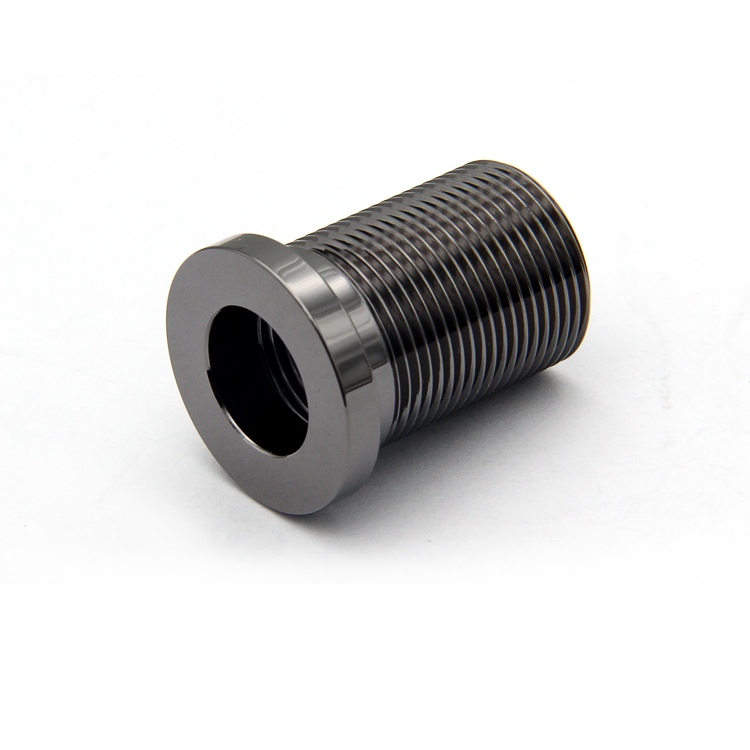


Brass CNC Parts are precision-machined components manufactured from brass using advanced CNC Machining processes. Brass is widely used for CNC machined parts because of its excellent machinability, good electrical conductivity, corrosion resistance, and attractive appearance.
Our Brass CNC Parts can be customized according to customer drawings, 3D CAD files, dimensions, tolerances, Material requirements, and application needs. CNC milling and CNC turning can be used to manufacture both simple and complex brass components for industrial equipment, electrical systems, automotive applications, plumbing, electronics, and other industries.
Custom machining allows brass components to be manufactured according to specific product requirements rather than standard dimensions.
Customers can provide:
2D engineering drawings
3D CAD models
Product samples
Required dimensions
Tolerance specifications
Material requirements
Surface finish requirements
Production quantities
Based on the design, the machining process can include CNC milling, CNC turning, drilling, tapping, threading, boring, and other precision machining operations.
This makes custom brass CNC parts suitable for applications where accurate dimensions, reliable assembly, and repeatable production are required.
Brass is considered an excellent material for CNC machining because it can be cut efficiently and produces a relatively clean machined surface.
During CNC machining brass, computer-controlled machine tools remove material from a brass workpiece according to programmed tool paths. This allows manufacturers to produce accurate holes, threads, slots, grooves, pockets, and complex contours.
Common machining processes include:
Brass CNC turning is suitable for components with cylindrical or rotational geometries. The brass workpiece rotates while cutting tools remove material to create the required dimensions.
Typical turned brass components include:
Brass shafts
Bushings
Pins
Fittings
Spacers
Threaded parts
Connectors
Valves and valve components
Brass CNC milling is used to manufacture components with flat surfaces, pockets, slots, holes, steps, and complex profiles.
It is suitable for custom brackets, housings, connectors, mounting components, mechanical parts, and other precision brass components.
CNC milling can also be combined with drilling, tapping, and other operations to produce finished parts with multiple features.
Brass offers several properties that make it suitable for precision-machined components.
Brass is generally easy to machine compared with many harder engineering metals. Its good machinability can help achieve efficient production and consistent machining results.
Brass provides good electrical conductivity, making it suitable for electrical and electronic components such as terminals, connectors, contacts, and other conductive parts.
Brass provides good resistance to corrosion in many environments, making it suitable for plumbing, fluid-handling, industrial, and outdoor applications.
Brass offers a useful combination of strength, hardness, and durability for many mechanical components.
The natural golden appearance of brass can also be an advantage for visible components and decorative mechanical parts. Additional finishing can further change the appearance and surface characteristics.
Different brass alloys can be selected according to the requirements of the finished component.
Common brass materials used for machining include various copper-zinc alloys with different combinations of machinability, strength, corrosion resistance, and electrical properties.
The appropriate brass grade should be selected according to:
Mechanical requirements
Electrical requirements
Corrosion environment
Machining requirements
Surface finish
Application
Industry standards
For demanding projects, material specifications should be confirmed before production to ensure that the selected brass alloy meets the application's requirements.
After CNC machining, brass parts can be supplied with different surface conditions depending on their intended application.
Possible finishing options include:
Polishing
Brushing
Plating
Nickel plating
Chrome plating
Passivation or protective treatments where applicable
Deburring
Surface finishing can improve the appearance, wear resistance, corrosion resistance, or functional performance of brass CNC components.
The appropriate finishing process depends on the customer's application and technical requirements.
Custom Brass CNC Parts are used in many industries because of the material's machinability, conductivity, corrosion resistance, and mechanical properties.
Brass is commonly used for:
Electrical terminals
Connectors
Contact components
Cable fittings
Electronic hardware
Conductive components
Its electrical conductivity and machinability make it suitable for precision electrical components.
CNC machined brass components are widely used for:
Pipe fittings
Adapters
Valves
Connectors
Bushings
Fluid-handling components
Brass can provide a practical combination of machinability, corrosion resistance, and durability for many plumbing applications.
Brass CNC parts can be used in selected automotive components, including connectors, fittings, bushings, and other precision mechanical parts.
Industrial machinery may use custom brass components for fittings, shafts, bushings, connectors, fasteners, and other mechanical assemblies.
Brass is also suitable for small precision components where accurate dimensions, good machinability, and reliable assembly are important.
CNC machining is suitable for both prototype development and production orders.
For prototypes, Brass CNC Parts can be manufactured directly from CAD files or engineering drawings, allowing designers to verify dimensions, assembly, and functionality before mass production.
For larger production quantities, CNC machining provides repeatable manufacturing and consistent part dimensions.
A typical production process includes:
Review the customer's drawings or CAD files
Confirm brass material and specifications
Analyze part geometry and machining requirements
Select CNC turning, milling, or combined processes
Machine the brass components
Perform dimensional inspection
Complete the required surface finishing
Package and ship the finished parts
A professional Brass CNC machining service should be able to handle different component designs, production quantities, and technical requirements.
For custom projects, customers can specify:
Brass material grade
Part dimensions
Machining tolerances
Thread specifications
Hole dimensions
Surface finish
Quantity
Packaging requirements
For complex parts, CNC machining can combine multiple operations to reduce manual processing and maintain dimensional consistency.
Choosing an experienced Brass CNC Parts manufacturer is important when the application requires precision, repeatability, and reliable material quality.
A professional manufacturer should have suitable CNC machining equipment, experienced technicians, inspection equipment, and quality control procedures.
For OEM and custom projects, direct communication with the manufacturer can also make it easier to review drawings, optimize machining methods, confirm materials, produce samples, and move into batch production.
Brass CNC Parts are components manufactured from brass using computer-controlled CNC machining processes such as CNC turning, milling, drilling, and tapping.
Brass CNC parts are commonly used in electrical and electronic equipment, plumbing systems, automotive components, industrial machinery, fluid systems, connectors, and precision equipment.
Yes. Brass generally has excellent machinability, allowing it to be efficiently machined into components with holes, threads, slots, grooves, and complex profiles.
Yes. Custom brass CNC parts can be manufactured according to customer drawings, CAD files, dimensions, tolerances, material grades, surface finishes, and production quantities.
Yes. Brass can be processed through both CNC turning and CNC milling. Turning is particularly suitable for cylindrical components, while milling is suitable for parts with flat surfaces, pockets, slots, holes, and complex profiles.
Looking for a reliable supplier for Brass CNC Parts? Send your drawings, 3D CAD files, material requirements, dimensions, tolerances, and production quantity. Our CNC machining team can evaluate your requirements and provide a suitable solution for prototype and production brass components.

JIESHENG HARDWARE is a professional manufacturer that focuses on customizing High- Precision Hardware Spare Parts more than 20 years of experience.
Copyright © 2026 Dongguan Jiesheng Hardware Industry Co., Ltd. All rights reserved. Privacy Policy



 English
