



 English

When engineering high-performance hardware, specifying the right metal grade is the single most critical factor determining your product’s lifespan and your overall production budget. In the world of precision machining services, three austenitic grades dominate the market: Stainless Steel 303, 304, and 316.
While these Materials might look identical to the naked eye, their mechanical behavior on a CNC lathe or multi-axis milling center varies drastically. As a leading CNC machining parts manufacturer in China, JeaSnn processes tons of these materials daily. This technical guide will analyze the critical tradeoffs of 303 vs 304 vs 316 stainless steel CNC machining to help you optimize your next manufacturing run.
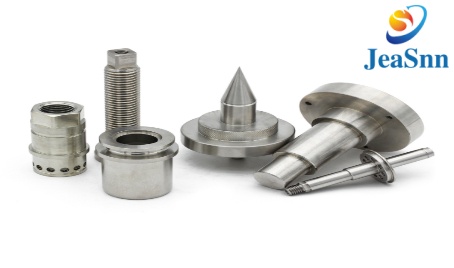
1. High-Speed Production: Sourcing 303 Stainless Steel Parts
If your project demands rapid, high-volume production of cylindrical components, designing 303 Stainless Steel parts is the undisputed efficiency champion.
The Machinability Secret: Grade 303 contains a small amount of added sulfur. This intentional chemical tweak makes the metal brittle during cutting, allowing it to chip easily. It drastically reduces tool friction and prevents long, hazardous stringy nests from wrapping around the machine spindle.
The Sourcing Tradeoff: The added sulfur comes at a cost—it compromises the material’s corrosion resistance and makes it unsuitable for welding.
Best Applied For: Custom 303 Stainless Steel parts are heavily deployed as heavy-duty fasteners, custom gears, complex shafts, bushings, and high-precision custom CNC lathe parts where mass-production speed dictates the budget.
2. Versatile & Budget-Friendly: Sourcing 304 Stainless Steel Parts
Stainless Steel 304 (often called 18/8 steel due to its 18% chromium and 8% nickel content) is the most widely specified stainless alloy on earth. Choosing 304 Stainless Steel parts represents the ideal sweet spot between performance and financial economy.
The Balanced Performer: It offers a fantastic combination of excellent corrosion resistance, high formability, and superb weldability. It easily withstands exposure to fresh water, structural loads, and standard atmospheric elements.
The Machinist’s Challenge: Because it lacks sulfur, 304 is much more "gummy" to machine than 303. It exhibits a trait called "work-hardening," where the material hardens rapidly as the cutting tool deforms it. To prevent tool breakage, our machinists utilize rigid setups and constant, aggressive feed rates when machining custom 304 Stainless Steel parts.
Best Applied For: We manufacture high-quality 304 Stainless Steel parts for structural industrial brackets, electronic enclosures, automotive components, and consumer hardware products.
3. Marine & Medical Grade Defense: Sourcing 316 Stainless Steel Parts
When your precision components must survive in the most unforgiving, corrosive environments, deploying custom 316 Stainless Steel parts is the mandatory choice.
The Molybdenum Armor: Grade 316 incorporates 2% to 3% Molybdenum. This single element radically alters its atomic structure, giving 316 Stainless Steel parts maximum protection against pitting, salt water, marine environments, and aggressive industrial chemicals.
The Premium Cost Factor: Due to its complex alloying elements, 316 raw material is the most expensive of the three. Furthermore, it is incredibly tough on cutting tools, requiring slower machining speeds and causing accelerated tool wear, which reflects in a higher processing invoice for 316 Stainless Steel parts compared to 304 or 303 alternatives.
Best Applied For: Our global clients typically source 316 Stainless Steel parts for marine deck hardware, subsea sensor casings, chemical mixing valves, and high-precision medical CNC Machining components.
Engineering Strategies to Optimize Stainless Steel Sourcing Costs
At JeaSnn, we don't just execute code—we actively help you optimize your production costs through smart Design for Manufacturing (DFM) strategies:
Switch Round Items to Grade 303: If a component is cylindrical and will spend its lifecycle indoors, design it as 303 Stainless Steel parts. The reduction in CNC lathe cycle times will slash your budget dramatically.
Consolidate Multi-Side Geometries: When designing complex precision CNC Milling components, try to utilize 304 Stainless Steel parts over 316 unless marine-grade defense is strictly required. This keeps raw block stock costs down and extends milling tool life.
Specify Post-Machining Passivation: For all custom 304 Stainless Steel parts and 316 variants, our facility implements an automated chemical Passivating bath post-machining. This strips away any microscopic iron particles transferred onto the part from our carbide tools, ensuring your components achieve their maximum native corrosion resistance.
Streamline Your Stainless Steel Supply Chain with JeaSnn
Choosing between 303, 304, and 316 requires a sophisticated balance of material chemistry and mechanical budget constraints. Why guess when you can leverage our engineering team's decades of experience?
Whether you require a small batch of 303 Stainless Steel parts for a fitment check, a production run of structural 304 Stainless Steel parts, or ultra-precise 316 Stainless Steel parts for extreme environments, JeaSnn has the hardware infrastructure to execute your project flawlessly.
Eliminate material sourcing risks today. Partner with a transparent, fully verified CNC Machining parts manufacturer in China.
Send your 3D STEP models or detailed 2D PDFs straight to our engineering desk for an accurate factory-direct quote and a comprehensive manufacturability analysis.engineer@cncpartschina.com