



 English

Across multiple industrial manufacturing fields, stainless steel stands as one of the most prevalently applied alloys due to its exceptional Material properties. Ironically, its inherent superior corrosion resistance is the exact factor that brings unique processing difficulties to machining operations.
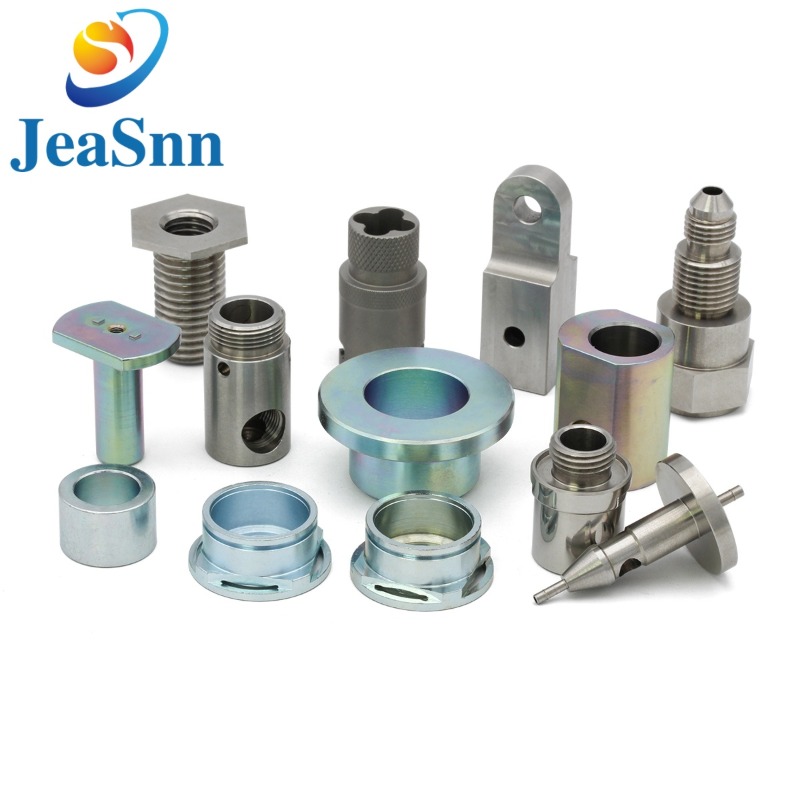
Serving customers across the globe, CNC Parts China specializes in tailor-made stainless steel CNC Machining and manufactures a complete portfolio of precision metal hardware. Our product range includes custom stainless steel washers, precision flat washers, stainless steel gaskets, CNC machined spacers, custom shafts, precision screws, custom nuts, and every stainless steel component made by CNC turning and milling.
Thanks to our advanced CNC turning, CNC milling, and Swiss lathe equipment, coupled with stringent quality inspection protocols, we efficiently tackle frequent stainless steel machining difficulties while keeping prices competitive and ensuring steady part quality for every order.
Common Stainless Steel Grades for CNC Machining
Differences in metallurgical composition result in unique machinability for each stainless steel grade:
304/304L Austenitic Stainless Alloy
Its tendency toward strain hardening limits its machinability, raising processing difficulty for complex custom CNC machined workpieces.
316/316L Stainless Alloy
Enhanced resistance to chloride ion and acidic corrosion supports its deployment in subsea and medical equipment. Increased alloy element content leads to moderate machinability inferior to 304 series.
303 Free-Cutting Stainless Steel
Sulfur alloying additives improve chip separation during cutting operations, fitting precision fasteners and machined fittings. However, such additives reduce the material’s overall corrosion tolerance.
17-4 PH Precipitation Hardening Stainless Steel
High mechanical strength and moderate corrosion resistance define this grade. Its cutting performance varies with thermal processing, applicable to aerospace and heavy-load structural parts.
410 / 420 Martensitic Stainless Steel
Excellent wear resistance makes them standard for cutters, valves, and pump components; hardness treatment will drastically increase machining difficulty.
2205, 2507 Duplex Stainless Steel
This alloy is extremely difficult to machine because of its very high strength and corrosion resistance.
The Importance of Recognizing Stainless Steel CNC Machining Difficulties
When sourcing custom CNC parts, most buyers fixate only on material costs, ignoring that numerous extra factors drive the final price tag.
Cost fluctuations caused by factors such as machining difficulty, production lead time, tool wear, inspection standards, and surface treatment are far greater than the cost of the raw materials themselves.
Comparing two identical products, aluminum products are significantly cheaper than stainless steel products. Machining stainless steel requires reduced cutting feed rates, frequent tool changes, additional deburring processes, precise control of coolant flow, longer machining cycles, and stringent quality inspection procedures. All these additional requirements substantially increase overall production costs, even for parts of identical dimensions. When designers factor in stainless steel’s inherent machining constraints at the early design stage, they are able to refine component structures, choose the most fitting stainless steel grade, and maintain smooth communication with seasoned CNC machining suppliers. Such design optimization elevates manufacturing efficiency, cuts down total production spending, and shortens order lead times.
Why Stainless Steel Is Difficult to Machine
1. Work Hardening: The Primary Obstacle to Stainless Steel CNC Machining
A core metallurgical trait of stainless steel is its high susceptibility to strain hardening during processing.
As cutting tools shear the workpiece surface in CNC operations, surface metal undergoes plastic deformation. This deformation drastically elevates local hardness, unlike the unprocessed base material, which retains its original mechanical properties.
When a cutting pass removes an insufficient depth of stock, or the tool merely scrapes and rubs the workpiece surface rather than executing clean cutting, the hardened surface layer will thicken continuously and grow far harder to machine in subsequent operations.
This phenomenon creates a chain reaction:
Cutting forces increase
Heat generation rises
Tool wear accelerates
Surface quality deteriorates
Dimensional accuracy becomes harder to maintain
For custom stainless steel washers, work hardening is particularly problematic because many washer designs involve shallow cuts, thin sections, and repeated finishing operations. Improper machining strategies can quickly harden the material around the bore or outer edge, leading to burr formation and inconsistent dimensions.
How CNC Parts China Solves This Problem
Our engineers optimize machining parameters to minimize work hardening by:
Selecting the appropriate feed rate for each stainless steel grade
Maintaining continuous chip formation
Using sharp carbide cutting tools
Avoiding unnecessary finishing passes
Applying optimized toolpaths that keep the cutter engaged
These strategies ensure consistent machining performance while extending tool life and improving dimensional stability.
2 . Elevated Cutting Loads Compound Machining Difficulties
Stainless steel demands far greater cutting force throughout processing when contrasted with aluminum alloys.
Thanks to its superior tensile strength and material toughness, cutting tools have to apply substantial pressure to achieve clean, effective stock removal.
Machine vibration
Tool deflection
Poor surface finish
Reduced dimensional accuracy
Increased spindle load
This is especially critical when machining:
Precision stainless steel washers
Thin shim washers
Long Custom Shafts
Small-diameter threaded components
Engineering Solution
Professional CNC manufacturers reduce cutting forces through:
High-rigidity CNC machining centers
Optimized cutter geometry
Balanced cutting parameters
Stable workholding fixtures
Multi-stage machining strategies
3. Stainless steel does not conduct heat very well
As temperatures rise:
Cutting tools soften more quickly
Tool coatings wear faster
Surface discoloration may occur
Built-up edge becomes more severe
Machining accuracy decreases
Excess heat will trigger minor thermal expansion during the fabrication of precision stainless steel washers that demand strict flatness and thickness tolerances, thereby undermining uniform dimensional accuracy.
4. Rapid Tool Wear Increases Production Costs
Tool wear is one of the largest cost drivers in stainless steel CNC machining.
Because stainless steel is both strong and abrasive, cutting tools experience continuous mechanical and thermal stress.
Common forms of tool wear include:
Flank wear
Crater wear
Edge chipping
Built-up edge
Thermal cracking
As tools wear, machining quality declines.
Symptoms include:
Rough surfaces
Poor edge quality
Burr formation
Diameter variation
Inconsistent hole sizes
For manufacturers producing thousands of OEM stainless steel washers, even minor tool wear can result in unacceptable dimensional variation across production batches.
How We Control Tool Wear
At CNC Parts China, we implement strict tool management procedures:
Scheduled tool replacement before failure
Real-time monitoring of tool life
Premium carbide inserts
Specialized coatings for stainless steel machining
Optimized spindle speeds and feeds
This proactive approach minimizes downtime while ensuring consistent production quality.
5. Chip Control Is More Difficult Than Many Other Metals
Unlike brittle materials that produce short chips, many stainless steel grades generate long, continuous chips during machining.
Poor chip control can cause several issues:
Chips wrapping around the tool
Scratches on finished surfaces
Interrupted cutting
Tool breakage
Reduced automation efficiency
This challenge becomes particularly important when machining:
Deep bores
Internal grooves
Thin washers
Precision spacers
Small threaded holes
Long chips can easily become trapped between the cutting tool and the workpiece, damaging the finished surface.
Chip Management Techniques
Professional CNC manufacturers improve chip evacuation through:
Chip-breaking insert geometries
Optimized feed rates
High-pressure coolant
Specialized toolpaths
Automatic chip conveyors
Efficient chip control is especially important for custom CNC machined washers, where surface scratches or edge damage can compromise assembly performance.
6. Burr Formation Is More Common in Stainless Steel Parts
Because stainless steel is highly ductile, burrs are more likely to form along machined edges.
Burrs present serious concerns for precision components such as:
Stainless steel flat washers
Shim washers
Medical components
Aerospace parts
Precision fasteners
Even a small burr can affect:
Assembly fit
Sealing performance
Load distribution
Operator safety
Product appearance
For precision stainless steel washers, customers often require completely burr-free inner and outer diameters.
Deburring Solutions
To achieve clean edges, manufacturers may use:
Precision cutting parameters
Secondary deburring processes
Vibratory finishing
Manual edge inspection
Automated brushing systems
Every finished washer should undergo visual and dimensional inspection before shipment to ensure edge quality meets customer specifications.
7. Strict Process Control Is Indispensable for Ultra-Tight Dimensional Tolerances
Numerous stainless steel CNC machined parts demand ultra-narrow tolerance bands, a critical requirement for aerospace, medical equipment, robotic and semiconductor production sectors.
Precision CNC equipment alone cannot guarantee stable compliance with such stringent tolerance standards. It also depends on stable machining processes, accurate inspection equipment, and experienced engineers.
At CNC Parts China, every batch of custom stainless steel washers is inspected using advanced metrology equipment, including:
Coordinate Measuring Machines (CMM)
Optical Vision Measuring Systems
Digital Micrometers
Height Gauges
Surface Roughness Testers
This comprehensive quality control process ensures every precision stainless steel washer, custom spacer washer, and CNC machined metal component meets customer drawings and international quality standards.
Professional CNC Shops’ Solutions for Stainless Steel Machining
1. DFM Pre-Optimization
Prior to machining, engineers optimize CAD models without compromising part functionality. This reduces processing difficulty, shortens production cycles, and prolongs cutting tool service life.
Common DFM adjustments include expanding internal fillet radii, simplifying complex structures, calibrating reasonable tolerances, and ensuring uniform wall thickness. For washers, designers refine outer diameter, inner diameter, thickness, flatness, and chamfer dimensions. Minor tweaks reduce cycle time by 20%–40% for mass orders.
2. High-Performance Cutting Tools
Stainless steel creates heavy cutting force and heat. Our workshop uses TiAlN/AlTiN coated tools crafted from carbide, cermet, and PCBN materials. Such advanced coatings reduce tool wear, enable unobstructed chip removal, and cut down washer burrs, resulting in flawless inner and outer circle finishes.
3. Customized Cutting Parameters
Excessive speed causes heat buildup; slow feeds trigger work hardening. Programmers adjust speed, feed, cutting depth, and tool paths based on material, part shape, equipment rigidity, and finish demands to suppress vibration and boost efficiency.
4. Real-Time In-Process Inspection
Automatic probing, tool compensation, FAI and SPC sampling detect defects mid-production, avoiding mass scrap. This greatly lowers reject rates for bulk OEM stainless steel washers and stabilizes dimensional consistency.
5. Full-Spec QC for Washers
Beyond basic inner/outer diameters, inspect thickness, parallelism, flatness, roughness, and concentricity via CMM, optical testers, and laser measuring gear. Complete inspection documents are available for medical, aerospace and semiconductor clients.
6. Iterative Process Improvement
Equipment alone cannot guarantee stable quality. To achieve sustained production optimization, engineers track key data including tool durability, scrap levels, machining cycles and process capability, helping cut unit expenses and streamline delivery schedules for long-term OEM collaborations.
Why Choose CNC Parts China for Stainless Steel CNC Machining?
CNC Parts China integrates state-of-the-art production technologies with decades-long precision machining expertise to assist clients in tackling all technical hurdles associated with stainless steel processing.
Our comprehensive service range covers:
Precision CNC Turning, CNC Milling, Swiss-Type Machining and Multi-Axis CNC Machining;
Full manufacturing support from prototype development to mass production;
Custom stainless steel washers, precision shim washers, spacer washers, bespoke shafts, precision screws, CNC-machined fasteners and OEM custom metal parts.
All orders come with exclusive supporting services as below:
All orders include pre-production free DFM analysis, professional material matching guidance, tailored machining parameter plans, rigorous in-process inspection, advanced precision measuring tools, and adjustable production quantities for samples and bulk goods alike.
Whether you need bespoke stainless steel washers, precision shafts, or elaborate CNC components, our engineers maintain reliable product consistency, affordable quotes, and on-time delivery.
Searching for a trustworthy supplier for stainless steel CNC machining services?
CNC Parts China focuses on bespoke stainless steel CNC machined parts, such as precision stainless steel washers, spacer washers, shims, custom shafts, screws, nuts, and various OEM metal hardware.
Our engineering team offers DFM design optimization to cut manufacturing expenses and ensure uniform product quality, catering to both prototype development and large-batch mass production demands.
Submit your inquiry for a free quote right now at engineer@cncpartschina.com, and you will obtain professional DFM optimization suggestions within 24 hours.