



 English

When it comes to custom CNC production, hitting exact dimensions and maintaining strict tolerances is just one half of the engineering challenge. Your selected surface finish will heavily influence the end‑product’s functional performance, service life, cosmetic appearance, and assembly fit for all CNC machined custom parts. Ranging from basic as-machined tool textures to professional chemical passivation processes, all secondary surface treatments dictate how custom CNC parts adapt to and interact with real-world operating environments.
Overly refined surface finish requirements will generate redundant production expenses and extend delivery cycles, while insufficient finishing specifications may cause premature part wear, frictional malfunction, and corrosion damage. As a professional supplier of custom metal CNC machining services, CNCPartsChina has manufactured hundreds of thousands of high-precision custom metal parts for diverse Industries, including aerospace, automotive, medical equipment, and industrial automation.
This in-depth guide systematically elaborates on core engineering trade-offs, surface roughness parameters, mainstream secondary finishing processes, and cost optimization tactics. This resource assists you in choosing a practical, cost‑efficient surface‑finishing solution for your next custom CNC part orders.
1. Why Surface Finish Matters for Custom CNC Metal Parts
Surface‑finishing goes well beyond simple cosmetic improvement; it counts as an essential engineering requirement. While sourcing custom CNC machined metal components, selecting the appropriate surface finish helps you meet multiple key‑performance objectives:
Corrosion & Chemical Resistance
Bare aluminum, carbon steel and copper‑based alloys will begin to oxidize once exposed to open air, moisture or aggressive chemical environments. Treatments such as anodizing, plating and passivation build‑up protective oxide or metallic barrier layers to shield the base metal.
Wear & Friction Reduction
Moving mechanical parts, drive shafts and bushings are subject to constant friction. Smoothed‑out surface profiles or hardened coatings, including hard‑coat anodizing and QPQ treatment, can slow Material wear and avoid galling issues.
Dimensional Tolerances & Assembly Fit
Secondary finishing operations may deposit or remove tiny layers of material on a micro‑scale. Accounting for these minor dimensional shifts guarantees that your high‑precision, tight‑tolerance metal parts fit together without problems during assembly.
Paint & Adhesive Bonding
Media‑blasted surfaces deliver controlled surface roughness. By enlarging the contact area, the surface forms firm mechanical interlocking structures to boost adhesion of paint, powder‑coat layers and heavy‑duty structural glues.
Aesthetic Appeal & Branding
For visible hardware, consumer‑electronic components and medical‑device parts, eliminating visible tool marks to obtain consistent matte or mirror‑polished surfaces greatly enhances your overall product quality and brand image.
2. Comprehensive Overview of Surface Finishes for Custom Metal Parts
Surface‑finishing treatments for CNC‑machined custom‑metal components can be sorted into three major groups: As‑Machined Finishes, Mechanical Treatments, and Chemical/Electrochemical Coatings.
Option A: As‑Machined Finish (Raw CNC Finish)
An as‑machined finish is achieved right after milling, turning, or drilling, with no further secondary surface‑altering operations carried out.
Characteristics: Obvious feed traces and tool‑cutting paths remain visible on the workpiece. Standard achievable roughness ranges from Ra 3.2 μm down to Ra 0.8 μm.
Best Used For: Internal structural components, prototype verification, cost‑controlled production batches and non‑visible assembled parts.
Advantages: No extra turnaround time, the most cost‑effective option, and full retention of the nominal dimensions specified in your CAD drawings.
Limitations: The bare metal is susceptible to oxidation — steel and unfinished aluminum in particular. Tool marks stay visible, and sharp edge burrs may remain if deburring is omitted.
Option B: Mechanical Finishing Techniques
Mechanical finishing modifies a part’s surface topography through impact force, abrasive action, or frictional contact.
1. Bead Blasting
This process uses compressed air to fire fine‑sized glass beads or ceramic blasting media against the workpiece surface.
Visual Profile: Delivers an even satin‑matte look and completely removes all directional cutter trails and feed‑line marks.
Ideal Materials: Suitable for custom hardware components fabricated from aluminum, stainless steel, titanium, and brass alloys.
Key Benefit: It provides superior surface pre-treatment for subsequent anodizing or painting, masking slight surface scratches caused during part manipulation.
Consideration: It brings slight changes to micro‑level tolerances, so avoid this process on critical bearing journals and fine‑pitch internal threads.
2. Vibratory Tumbling & Deburring
Workpieces are loaded into a vibratory tub containing ceramic, plastic, or synthetic media, together with liquid processing compound.
Visual Profile: Smooth surfaces with softly rounded edges and a subtle low‑sheen satin texture.
Best Used For: Removing burrs from large‑volume small‑sized CNC custom‑parts, trimming sharp edge flash, and releasing residual stress on sheet‑metal or machined components.
3. Polishing & Optical Buffing
Gradated abrasive wheels combined with polishing compounds are used either manually or by machine to level microscopic surface peaks.
Visual Profile: Bright, highly‑reflective mirror‑like finish.
Best Used For: Medical‑device components, optical reflector parts, food‑safe stainless‑steel assemblies and decorative custom hardware.
Option C: Chemical & Electrochemical Surface Coatings
Chemical‑based surface treatments modify the chemical properties of the substrate or deposit a protective outer layer on your custom CNC‑machined metal workpieces.
1. Anodizing (Type II & Type III Hardcoat)
Anodizing refers to an electrochemical treatment exclusively designed for aluminum CNC‑parts (including grades 6061, 7075, 2024). It transforms the outer layer of base aluminum metal into a long‑wearing aluminum‑oxide film.
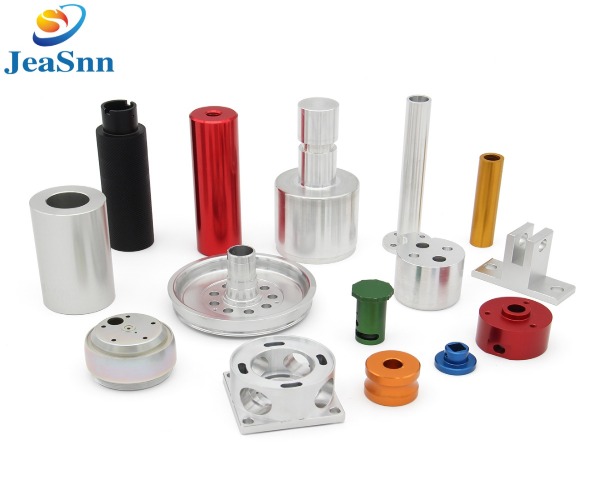
Anodizing Type II (Sulfuric Anodize): Forms a durable protective oxide layer with a thickness of 5–25 μm. The finished surface supports vibrant color dyeing, including black, blue, red, and gold, helping products achieve unique visual branding effects.
Anodizing Type III (Hardcoat): Creates a compact, heavy‑duty oxide film ranging from 25 μm to over 50 μm, providing exceptional surface hardness reaching 60–70 HRC. Well‑suited for sliding components under heavy friction, military‑grade hardware and parts working in harsh outdoor environments.
2. Chemical passivation
Passivation is a targeted surface‑finishing procedure for high‑precision stainless‑steel workpieces, including grades 304, 316 and 17‑4 PH. Submerged in citric‑acid or nitric‑acid baths, the components have free‑iron residues stripped from their outer surfaces.
3. Electroless Nickel Plating (ENP)
Electroless nickel plating uses an autocatalytic chemical reaction to lay down a nickel‑phosphorus alloy layer on workpiece surfaces. The coating deposits with exceptional uniformity, covering even intricate part geometries, blind holes, and otherwise inaccessible internal threads.
Key Benefits: Delivers highly consistent coating thickness, surface hardness up to 600 HV, and excellent corrosion resistance for custom carbon‑steel and copper components.
4. Powder Coating and Spray Painting
Powder particles are deposited onto the surface of the parts through electrostatic adhesion, followed by conventional heat treatment or curing, thereby forming a durable protective coating.
Best Used For: Ideal for sheet metal housings, heavy equipment mounting brackets, and externally exposed custom steel structural parts.
3. How to Choose the Right Surface Finish
Your selection of a surface‑finish solution should start with the part’s real‑world operating requirements, instead of focusing solely on visual appeal.
Below are seven key factors you need to weigh up.
1. Consider the Base Material
Each metal material reacts uniquely to different surface‑finishing processes.
Aluminum
Available treatments: Anodizing, bead blasting, polishing, powder coating
Stainless Steel
Available treatments: Polishing, brushing, passivation, bead blasting
Carbon Steel
Available treatments: Zinc plating, black oxide, nickel plating, powder coating
Brass
Available treatments: Polishing, brushing, plating, clear protective coatings
For this reason, you should specify both workpiece material and surface‑finish requirements at the very beginning when submitting a quote request for custom‑made metal components.
2. Consider the Operating Environment
One of the most critical questions to answer before choosing a finish is where the finished part will be deployed.
Indoor, dry‑condition use: An as‑machined surface is often adequate for many applications.
Outdoor exposure: Recommended options include anodizing, zinc plating, powder coating, and other anti‑corrosion plating treatments.
Marine environments: Parts exposed to salt and humidity demand enhanced corrosion‑resistant finishes.
Chemical‑rich environments: You must carefully check whether your selected coating is chemically compatible with surrounding substances.
High‑friction working conditions: Opt for a surface treatment that delivers superior wear‑resistance performance.
Generally speaking, the harsher the operating environment, the more vital your finishing specification becomes.
3. Consider Appearance Requirements
Decorative surface treatments are not necessary for every machined component.
Ask yourself whether the finished hardware will be visible to end‑users.
If the part sits deep inside equipment and stays hidden, spending extra on high‑end cosmetic finishing will bring little practical benefit.
By contrast, appearance often strongly influences purchasing decisions for consumer‑facing products, lighting fixtures, electronic enclosures and exposed mechanical assemblies.
Common finishing selections for visible custom CNC‑machined parts: Black anodizing, color anodizing, polishing, brushing, bead blasting, powder coating.
4. Consider Dimensional Tolerances
This factor carries extra weight for high‑precision CNC‑machining projects.
Nearly all post‑processing surface treatments alter a component’s outer dimensions.
As an example: if a bore is engineered to fit a precision‑fitted bearing, applying a coating without accounting for coating thickness may shrink the hole diameter and cause assembly failure.
The same risk applies to shafts, threaded holes, pins, bushings, mating contact surfaces, precision spacers and washers.
You should mark all critical dimensions on your engineering drawings, and clarify whether these key surfaces need masking or separate finishing arrangements.
A reliable CNC supplier will go over all these specifications before starting manufacturing.
5. Consider Cost
Surface‑finishing operations add to the overall production cost of custom‑machined metal parts.
A basic as‑machined finish is almost always cheaper than multi‑stage cosmetic finishing workflows.
If you are working within a tight‑budget project, evaluate these questions:
Which surfaces actually require finishing work?
Does the whole component need surface treatment?
Are cosmetic specifications truly necessary?
Can the base metal itself deliver sufficient corrosion protection?
Would a simpler, lower‑cost finish meet all functional needs?
For large‑batch orders, even a minor per‑unit finishing expense can accumulate into a substantial overall cost for your whole project.
6. Consider Production Volume
The optimal surface‑finish choice for a single prototype is not always suitable for large‑scale mass‑production.
When manufacturing prototypes or small‑quantity batches, priorities usually include short lead‑times, low setup expenses and simple‑to‑execute processing.
For mass‑production runs, manufacturers tend to focus on finish repeatability, stable color outcomes, consistent coating thickness, competitive per‑part pricing and sufficient production capacity.
That explains why surface‑finishing plans should be discussed with your CNC supplier at the quotation stage, rather than being added as an afterthought once production has begun.
7. Consider the Final Application
Different industries impose distinct performance requirements on machined components.
Automotive: Custom CNC parts typically require good corrosion resistance, wear resistance and stable dimensional performance.
Electronics: Surface appearance, electrical conductivity, anti‑corrosion properties and dimensional accuracy are all essential.
Medical Equipment: Components must deliver excellent cleanability, corrosion resistance, uniform surface finish, and chemical compatibility with materials intended for human contact.
Lighting: Anodizing, polishing, and bead blasting are popular finishing options for aluminum‑made CNC parts, striking a perfect balance between attractive appearance and lasting service durability.
Robotics: Surface treatments that lower friction and improve wear‑resistant performance are highly recommended for dynamically moving mechanical components.
Industrial Equipment: Long‑lasting durability, corrosion protection, and reliable ongoing performance are normally prioritized above cosmetic‑related requirements.
At Jiesheng Hardware, we manufacture high‑precision metal parts serving diverse industries: lighting fixtures, safety hardware, medical devices, 3D‑printing equipment, CNC routers, electrical assemblies, industrial‑grade machinery, automotive components, aerospace‑grade parts, robotic systems and many other fields.
Partner with CNCPartsChina for Your Precision Custom CNC Parts
Choosing the optimal surface finish ensures your custom-made CNC-machined parts meet strict mechanical specifications while staying within project budget limits. At CNCPartsChina, we provide complete end-to-end CNC manufacturing—from rapid prototyping to full-volume production with integrated surface finishing services.
Advanced Equipment: We are equipped with 3‑axis, 4‑axis, and 5‑axis CNC Milling machines, high‑precision CNC Turning equipment, and Swiss‑type lathes.
Strict Quality Control: Comprehensive CMM inspection, surface‑roughness measurement, and material test reports (MTR) can be supplied on request.
Complete Finishing Options: A full selection of surface treatments is available, including anodizing, bead blasting, passivation, electroplating, heat treatment, powder coating, and bespoke polishing services.
Ready to kick‑off your upcoming custom‑machining project?
Get instant DFM feedback and competitive pricing on your custom parts today.
Upload CAD Files: Submit Your Drawing for a Fast Quote
Email Direct: Reach our engineering team at engineer@cncpartschina.com