



 English

When developing high‑performance, custom precision‑machined CNC components, choosing the proper aluminum alloy ranks among the most critical decisions throughout the whole production process. Aluminum has long been a top‑preferred Material for aerospace, robotics, automotive, defense, and medical sectors, thanks to its outstanding strength‑to‑weight ratio, superior machinability, inherent corrosion resistance, and favorable thermal properties.
Even so, performance varies widely from one aluminum alloy to another. Out of a broad selection of available grades, 6061 and 7075 aluminum are the two most frequently specified materials for custom-built CNC machined parts.
Though these two alloys share several physical similarities, there are substantial gaps in their mechanical performance, yield strength, fatigue resistance, and overall manufacturing expenses. Picking an unsuitable alloy grade for your custom CNC metal components may result in wasted material costs, processing difficulties, or even structural breakdown under working loads.
As a trusted worldwide manufacturer of precision custom metal parts, CNCPartsChina delivers sophisticated 3‑axis, 4‑axis, and 5‑axis milled and turned workpieces. This comprehensive technical breakdown weighs up chemical makeup, mechanical performance, thermal properties, and cost‑trade‑offs of 6061 and 7075 aluminum alloys. It equips your engineering team to select the most suitable material for your next custom CNC‑machining project.
1. Material Basics: A Comparison Between 6061 and 7075 Aluminum
A solid command of the metallurgical fundamentals behind these two aerospace‑standard aluminum alloys is a must when you are specifying materials for custom CNC‑machined parts.
6061 Aluminum (General‑Purpose Structural Alloy)
Released back in 1935, 6061 is a member of the 6000‑series aluminum family, with magnesium and silicon functioning as its primary alloying additives. Long‑titled the industry’s “workhorse” for structural manufacturing, this alloy strikes a versatile balance between mechanical strength, weld‑ability, corrosion resistance and cost‑competitive pricing.
7075 Aluminum (Aircraft‑Grade Ultra‑High‑Strength Alloy)
Originally developed during the Second World War for military aircraft frameworks, 7075 belongs to the 7000‑series alloy group. Zinc and copper are its primary alloying additives. As one of the highest‑strength aluminum alloys sold on the open market, it offers tensile performance on par with numerous structural steels, all while maintaining a low‑density, lightweight build.
2. Machinability & Manufacturing Performance
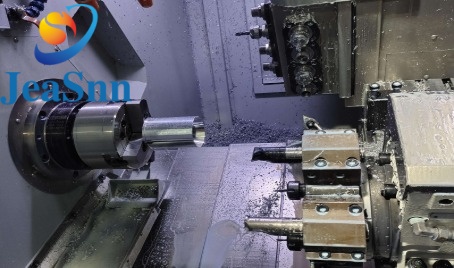
Machinability directly dictates spindle speeds, tool life, chip evacuation, and cycle times—the main cost drivers in producing custom metal CNC Machining parts.
CNC Machining of 6061 Aluminum
6061‑grade aluminum delivers outstanding machinability when processed with commonplace CNC milling, turning, and drilling procedures.
Chip Formation: Smooth, easily‑handled chips are generated during cutting when sharp, polished carbide end mills with large rake angles are deployed.
Surface Quality: A fine surface finish of Ra 0.8 μm–Ra 1.6 μm can be obtained right off the cutter, with no secondary polishing needed.
Stress Relieving: Using 6061‑T651 as your base material cuts down on internal residual stress, so flat plates stay flat and distortion‑free even during heavy deep‑pocket CNC milling.
CNC Machining of 7075 Aluminum
Even with its superior hardness, 7075 aluminum offers remarkably good machining performance. Plenty of CNC operators actually favour 7075 for complex, high‑precision part geometries.
Brittle Chip Evacuation: Higher zinc and copper content reduces the ductility of 7075 compared with 6061. It creates short, firm, breakable chips that separate cleanly from the workpiece, thus avoiding the troublesome long, tangled chip nests.
Dimensional Stability: Thanks to its high hardness, thin walls, deep ribs, and tiny detailed features, 7075 parts are able to hold tighter geometric tolerances and resist deflection under cutting‑tool pressure.
Surface Luster: After milling, the workpiece yields an ultra‑smooth, bright surface free of burrs.
3. Post‑Processing and Surface Treatments for Custom‑Machined Components
Secondary finishing operations can boost corrosion resistance, improve wear‑resistant properties, and add branded visual appeal to your custom CNC manufactured parts.
Corrosion Resistance & Chemical Passivation
6061 Aluminum: This alloy features excellent inherent corrosion resistance. A self‑generated native oxide layer forms over its surface, shielding 6061 against damage from ambient air, fresh water, and industrial humid environments.
7075 Aluminum: Its relatively high copper content (1.2%‑2.0%) creates notable drawbacks. Without surface protection, 7075 aluminum is far more prone to atmospheric oxidation, stress‑corrosion cracking and galvanic corrosion. All 7075 parts deployed in outdoor environments require protective treatments including anodizing, plating or painting.
Anodizing Performance (Type II & Type III)
Type II Color Anodizing: 6061 yields bright, sharp, and vivid dyed finishes, including clear, red, blue, black, and gold. While 7075 can also absorb coloring agents effectively, its alloying elements usually produce slightly deeper, less‑vibrant tones.
Type III Hardcoat Anodizing: Both aluminum alloys are compatible with hard‑coat anodizing. A compact ceramic‑grade aluminum‑oxide film between 25 μm and 50 μm is created through this process, delivering surface hardness comparable to 60‑70 HRC.
Welding & Fabrication
6061 Aluminum: It lends itself readily to TIG and MIG welding processes, making it the preferred material for custom hardware that needs welded support frames in later‑stage production.
7075 Aluminum: Not recommended for structural‑grade welding. Severe temperature fluctuations during welding will trigger micro‑cracks and stress fractures within the heat‑affected zone (HAZ).
4. Industry‑Specific Applications: How to Choose the Correct Alloy
By aligning your aluminum selection with the real‑world working conditions of your parts, you can avoid unforeseen component failure and maintain cost‑efficient production.
Recommended Use‑Cases for Custom 6061 CNC Machined Parts
Electronics and Sensor Housings: Boasting excellent thermal transfer Capabilities, 6061‑aluminum is an ideal material for heat dissipation sinks, PCB enclosures and fixture brackets for optical sensor assemblies.
Automotive Structural Parts: The alloy offers consistent mechanical strength alongside great weld performance, making it a solid option for custom‑fabricated engine mounts, suspension brackets and chassis panels.
Hydraulic and Pneumatic Systems: Equipped with robust anti‑corrosion properties, 6061 serves as a reliable solution for hydraulic manifolds, pneumatic cylinder bodies and fluid‑control valve housings.
Medical Equipment and Commercial Hardware: Its superior anodizing capability yields smooth, sanitary and multi‑colored exterior finishes, making it a great fit for medical diagnostic devices.
Recommended Use‑Cases for Custom 7075 CNC Machined Parts
Aerospace and Defense: The alloy is used for structural spars, wing ribs, missile casings and landing‑gear assemblies, where high yield strength must be achieved at low weight.
Heavy‑Duty Robotic Systems: Light weight robotic arms, end-of-arm tools and gearbox housings built from 7075 stand up to fast acceleration, high torque loads and repeated fatigue cycles.
High‑Performance Motorsport Components: It provides steel‑level yield strength for heavily‑loaded suspension links, steering knuckles, brake calipers and racing wheel hubs.
High‑Stress Industrial Tooling: Commonplace parts include mold core inserts, blow molding dies and heavy‑duty clamping fixtures that endure strong impact forces.
5. Cost Saving and Budget Optimization Strategies
One core task for engineering teams is to strike a reasonable balance between performance requirements and total production costs for finished components.
Raw Material Price Gap: Because of its complicated alloy composition and demanding heat‑treatment processes, 7075 aluminum blank material usually carries a 30%‑50% higher price per pound compared with conventional 6061 aluminum stock.
Machining Cycle Efficiency: Although 7075 can support higher cutting feed rates thanks to its clean chip‑breaking property, it tends to cause accelerated wear on cutting tools. By contrast, the excellent machinability of 6061 helps reduce overall CNC processing expenses.
Extra Expenses for Coatings and Finishing: To guard against corrosion damage, 7075 parts nearly always need post‑processing surface protection such as anodizing or chromate conversion coating. These extra operations bring additional finishing costs to your custom precision metal components.
6. Work With CNCPartsChina for Your Precision‑Machined Custom Aluminum Components
Choosing between 6061 and 7075 aluminum alloys means weighing multiple factors together: yield strength, fatigue resistance, corrosion-related operating conditions, and your overall project budget.
CNCPartsChina provides one stop CNC fabrication solutions covering every stage of production, including material‑selection consultation, DFM (Design for Manufacturability) review, 5‑axis CNC milling, Swiss‑style turning and high‑end post‑processing surface treatments.
Certified Raw‑Material Supply: Every batch of 6061‑T6, 6061‑T651, 7075‑T6 and 7075‑T651 stock comes with full traceability and official material test reports (MTR).
Rigorous Quality Assurance: All finished parts undergo thorough CMM dimensional verification and surface‑roughness testing, backed by our ISO9001‑compliant quality‑management framework.
Full‑Range Surface‑Finishing Services: Our in‑house capabilities include Type II and Type III anodization, bead blasting, chemical conversion coatings, and laser marking engraving.
Ready to Start Your Next Custom Machining Project?
Get instant DFM feedback and competitive pricing on your custom-made CNC parts today.
Upload CAD Files: Submit Your Drawing for a Fast Quote
Email Direct: Reach our engineering team at engineer@cncpartschina.com