



 English

While spacers and washers are small fastener components, they are indispensable in mechanical assembly systems. Spacers are engineered to preserve precise separation between parts, while washers undertake load dispersion, protection of mating contact faces, and adjustment of assembly gaps.
Ready-made standard spacers and washers can satisfy basic application requirements for OEMs and engineering teams. Even so, numerous mechanical systems require non-standard sizes, specialty Materials, strict tolerances, or bespoke profiles. Custom CNC spacers and precision washers serve as the ideal solution for these demanding scenarios.
Selecting between spacers and washers goes far beyond visual differences. They differ in function, dimension specifications, material options, tolerance requirements, and installation techniques.
This guide outlines the distinctions between custom CNC spacers and washers, their respective application scenarios, available material choices, the impact of CNC Machining on precision and cost, and the necessary details to prepare when placing orders for custom components.
What Is a CNC Spacer?
A CNC spacer is a mechanical part whose core purpose is to create and sustain defined separation between two components. Generally, it appears as a short tube, sleeve, or cylindrical ring with a central bore. Based on project requirements, spacers can be threaded or unthreaded, hollow, flanged, hexagonal, or fabricated with fully custom geometries.
Unlike ordinary stock hardware restricted to catalog sizes, custom CNC spacers are machined strictly to customer-specified dimensions. Key measurable parameters cover outer diameter, inner diameter, overall length, wall thickness, bore size, thread specification, flange diameter, shoulder and chamfer dimensions, plus surface finish.
CNC turning technology is ideal for producing cylindrical spacers. It delivers precise control over outer diameter, inner bore, total length and concentricity to meet tight accuracy requirements.
CNC Parts China supplies a wide range of spacer styles for bespoke projects, such as round spacers, aluminum spacers, threaded standoffs, hollow standoffs and metal standoffs. These custom CNC spacers are widely adopted across OEM mechanical assemblies to maintain fixed gaps, isolate parts and ensure stable positioning for bolts and shafts.
What Is a CNC Washer?
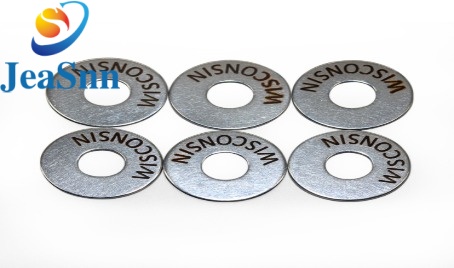
A CNC washer refers to a thin component, either flat or purposefully contoured, featuring a central bore. Installed underneath screws, bolts, and nuts against mating surfaces, washers carry out a wide range of mechanical duties. They dissipate clamping forces, preserve contact surfaces from damage, regulate assembly gaps, compensate for minor dimensional discrepancies, enhance assembly stability, provide electrical insulation, and serve sealing and positioning purposes.
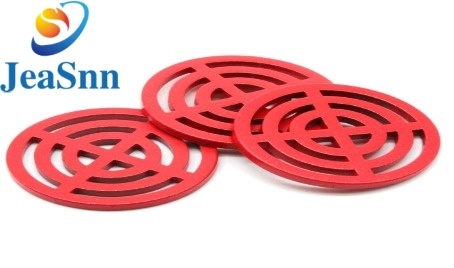
Basic flat stock washers carry simple structures, yet custom CNC washers support far more intricate geometries. Custom manufacturing supports non-standard inner bore sizes, expanded outer diameters, bespoke thickness values, counterbored or countersunk bores, multi-hole patterns, specialized contours, custom material selections, and ultra-rigorous dimensional tolerances.
Standard stamped washers often fail to satisfy demanding engineering specifications for many OEM projects. CNC Machining enables manufacturers to produce washers tailored exactly to design constraints. Whether used as precision thrust bearing surfaces, insulating components, or load-spreading parts, custom CNC washers can be engineered to fit distinctive assembly needs. When standard ready-made hardware fails to satisfy product specifications, CNC-machined washers assist engineers in resolving complicated fitting and tolerance issues.
Custom CNC Spacers vs. Washers: What Is the Difference?
The simplest way to differentiate custom CNC spacers and washers is to examine their core purposes. Spacers are mainly used to maintain spacing between components, while washers are engineered to bear, protect, and distribute loads around fasteners. The boundary between them can be vague in some specialized assemblies, since both parts can assist with positioning and clearance management.
Custom CNC spacers feature a sleeve or cylindrical structure with a central bore and usually have longer body lengths. They deliver outstanding positioning performance, and threaded versions are widely available. CNC turning is the primary manufacturing method, while CNC Milling is applied to create special features. Custom dimensions are supported, and they are extensively adopted in OEM applications. Although spacers can achieve load distribution, this is not their main function.
Custom CNC washers take the form of thin rings or flat discs, also with a central hole. Their positioning capability only applies to certain specific designs, and load distribution serves as their primary function. Threaded washer styles are less prevalent. CNC turning is regularly used for production, and CNC milling is deployed for complex profiles. Custom sizing is available, and they are also widely used in OEM projects.
The right choice depends on what the component needs to accomplish inside the assembly.
When Should You Use a Custom Spacer?
Custom spacers become the preferred choice when your core design goal is to hold a fixed separation between parts.
First, they help maintain precise gaps between components. Take the case where two plates require an exact 10 mm gap; a 10 mm spacer placed between them holds this dimension steady. Such a solution sees extensive use in electronic housings, machinery, robotic systems, automation hardware, control cabinets, and automotive assemblies.
Second, spacers stop unwanted contact between components. A typical use case is isolating PCBs from aluminum enclosures, or preserving clearance between separate mechanical parts to avoid interference.
Third, custom spacers stabilize the axial placement of shafts, bearings, gears, and other rotating parts. For such scenarios, the spacer’s overall length and parallelism are critical to reliable operation.
Fourth, they establish mounting clearance for printed circuit boards. Metal standoff spacers are commonly deployed to mount PCBs inside electronic enclosures. They deliver mechanical support while creating a defined gap between the circuit board and housing.
When Should You Use a Custom Washer?
Custom washers are the better option when your main objective is to spread the clamping load generated by screws or bolts.
First, they expand the contact area. Washers spread fastener pressure across a broader surface, which effectively prevents localized deformation, especially when fastening into soft metallic materials.
Second, washers safeguard mating surfaces. They form a protective barrier between fasteners and assembly components, minimizing scratches, indentations, and other surface defects caused by torque tightening.
Third, they help manage assembly clearance. In certain mechanical systems, washers can function as thin spacers. For minor dimensional adjustments, precision washers often serve as a more practical choice compared with longer solid spacers.
Fourth, washers can provide electrical isolation. Non-metallic washers manufactured from engineered plastics deliver insulating properties, making them well suited for electronic and electrical assembly applications
Materials for Custom CNC Spacers and Washers
Material selection affects strength, weight, corrosion resistance, conductivity, wear resistance, and cost.
Aluminum Spacers and Washers
Aluminum is a popular material for lightweight custom CNC spacers.
6061 aluminum is often used because it offers a useful balance of machinability, strength, corrosion resistance, and weight.
Aluminum spacers can be used in:
Automotive components
Aerospace equipment
Robotics
Electronic assemblies
Industrial machinery
CNC Parts China offers aluminum spacers with custom dimensions and CNC turning processes designed to control roundness, concentricity, wall thickness, and bore dimensions.
Stainless Steel Spacers and Washers
Stainless steel is useful when corrosion resistance and mechanical strength are important.
Common grades include:
303 stainless steel
304 stainless steel
316 stainless steel
303 stainless steel parts can be attractive for applications where machinability is important.
304 stainless steel parts provide a widely used combination of strength and corrosion resistance.
316 stainless steel parts may be preferred for more demanding environments where improved corrosion resistance is required.
Brass Spacers and Washers
Brass provides good machinability and electrical conductivity.
It can be used for:
Electrical components
Electronic equipment
Decorative hardware
Precision mechanical assemblies
Brass is also commonly used for custom CNC components requiring efficient machining and good dimensional consistency.
Steel is appropriate when strength and durability are more important than weight reduction.
Depending on the application, carbon steel or alloy steel may be selected.
Surface treatment such as zinc plating can be added when additional corrosion protection is required.
Spacer or Washer: How Do You Choose?
A simple decision process can help.
Choose a Spacer If:
You need to maintain a specific distance
You need to separate two components
You need axial positioning
You need a sleeve around a fastener
You need PCB or panel spacing
You require a threaded standoff
Choose a Washer If:
You need to distribute fastener load
You need to protect a mating surface
You need a thin adjustment component
You need electrical isolation
You need a shim-like component
You need additional contact area
Consider a Custom Part If:
Standard sizes do not fit
A specific material is required
You need unusual dimensions
The component must fit an existing assembly
Tight tolerances are required
You need special holes, threads, or profiles
You are producing an OEM product
How to Reduce the Cost of Custom Spacers and Washers
Custom parts do not necessarily have to be expensive.
Several design decisions can help reduce manufacturing costs.
Use Standard Materials
Where project specifications allow, standard off-the-shelf materials — including 6061 aluminum, 304 stainless steel, brass, and carbon steel — greatly streamline material sourcing and shorten production lead times.
Avoid Unnecessary Tight Tolerances
Specify tight tolerances only for functional dimensions.
Keep Geometry Simple
A simple cylindrical spacer is generally easier to manufacture than one containing multiple grooves, threads, steps, and special profiles.
Optimize Quantity
When ordering larger quantities, setup and programming costs can be distributed across more parts.
Reduce Secondary Operations
Additional polishing, coating, grinding, or special machining can increase the final price.
Select finishing requirements based on actual application needs.
Why Choose CNC Parts China for Custom Spacers and Washers?
CNC Parts China focuses on customized precision hardware and CNC machined metal components. Its product range includes custom spacers, metal standoffs, threaded standoffs, hollow standoffs, aluminum spacers, and other precision hardware components.
The manufacturing process can combine CNC turning, threading, drilling, boring, milling, finishing, and inspection according to the requirements of each custom part.
This is particularly useful for OEM customers who need several related components from one supplier.
For example, a mechanical assembly may require:
Custom CNC screws
Precision shafts
CNC bushings
Custom washers
Aluminum spacers
Stainless steel standoffs
Nuts and other fasteners
Rather than sourcing every component separately, customers can submit their drawings and evaluate the complete project as a group.
This can simplify communication, quality control, production coordination, and packaging.
Conclusion: Choose the Right Custom Precision Part
Where standard off‑the‑shelf hardware fails to satisfy unique design specifications, custom CNC machining enables the fabrication of precision components with fully customized dimensions, materials, strict tolerances, specialized threads, and customized surface finishes. For OEM producers and engineering teams, component selection relies on a complete set of criteria — including part functionality, assembly demands, material performance, tolerance accuracy, production volume and long-term durability — instead of focusing solely on individual part cost.
CNC Parts China supplies a full range of custom components such as CNC spacers, precision washers, metal standoffs, bushings and custom metal parts. Customers can submit 2D drawings or 3D CAD files with specific material, quantity, tolerance, and surface finish requirements to acquire professional evaluation and accurate quotations.