



 English

Screws are among the most widely used fasteners in mechanical assemblies. From industrial equipment and automotive components to electronics, robotics, and custom machinery, screws are responsible for securely connecting components and maintaining assembly stability.
For many applications, standard screws are an economical and convenient solution. However, standard fasteners cannot always meet the dimensional, Material, strength, thread, or installation requirements of a specialized product.
This is where custom CNC screws become valuable.
Unlike standard screws built to fixed industry specifications, custom CNC screws can be fabricated in strict accordance with customer-supplied drawings, samples, and defined parameters including dimensions, materials, thread standards, tolerances, and surface finishes.
For OEMs and engineering teams, selecting between standard and custom fasteners goes beyond cost considerations. The optimal solution is determined by practical factors such as operating application, assembly demands, production volume, precision needs, and overall product design.
In this guide, we compare custom CNC screws vs. standard screws and explain when custom screws are the better choice for your project.
What Are Custom CNC Screws?
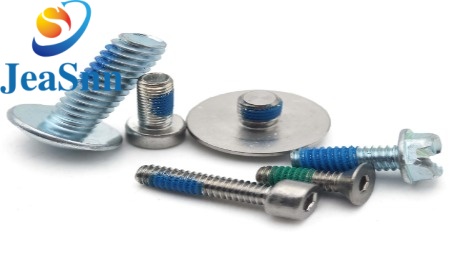
Custom CNC screws are precision fasteners customized for specialized engineering use cases, standing apart from generic standard screws with fixed specifications. Produced based on customer drawings, 3D models, physical samples, and personalized technical requirements, these fasteners support comprehensive customization of sizes, threads, geometries, materials, tolerances, and surface treatments. They can also adopt exclusive non-standard structures that off-the-shelf hardware cannot achieve, perfectly adapting to complex and demanding mechanical assembly applications.
Custom CNC Screws vs. Standard Screws
The biggest difference is flexibility.
Standard screws are manufactured according to predefined specifications, while custom screws are manufactured around the requirements of a specific application.
| Feature | Standard Screws | Custom CNC Screws |
| Dimensions | Fixed standard sizes | Custom dimensions |
| Thread | Standard options | Custom thread options |
| Head design | Standard | Custom |
| Material | Available standard | Application-specific |
Tolerance | Standard | Drawing-defined |
| Prototyping | Limited | Suitable |
| OEM integration | Depends on availability | Designed for the application |
| Surface finish | Standard options | Custom options |
Low-volume custom parts | Less flexible | Highly suitable |
When Should You Choose Custom CNC Screws?
Custom CNC screws are not mandatory for all mechanical applications. Standard screws are fully sufficient and preferable if they perfectly fit assembly conditions and meet required strength and corrosion resistance standards. However, custom machined fasteners become the ideal solution when standard products fail to adapt to project-specific design and functional requirements, mainly covering three typical scenarios.
First, custom screws are essential for non-standard dimensional needs, which is the most common reason for customized production. Many assembly scenarios require exclusive specifications that off-the-shelf screws cannot provide, including customized screw lengths, special head sizes, unique shank diameters, specific thread lengths, and custom shoulder dimensions. CNC manufacturing can tailor fastener dimensions precisely to match unique assembly structures when no standard options are available.
Second, custom CNC Machining is necessary for mismatched standard thread specifications. Thread compatibility is vital to stable mechanical assembly. If standard screws feature incompatible thread diameters, pitches, lengths, forms, or industry standards, custom fasteners can be fabricated flexibly. Manufacturers can follow metric, inch or other application-specific thread requirements, with clear thread parameters specified in OEM design drawings to ensure precise matching.
Third, projects with special screw head requirements need customized solutions. The screw head determines installation feasibility, space clearance, appearance, and load distribution. While flat, pan, socket, button and hex heads are common standard designs, specialized equipment and electronic enclosures often demand exclusive head geometries. Custom CNC screws allow full customization of head diameter, height, shape, and drive features to fit special installation and functional needs.
Fourth, high-precision projects demand custom screws with strict dimensional tolerances. Ordinary standard screws with loose tolerance levels work for basic fastening scenarios, while precision mechanical assemblies require screws to serve as both fasteners and locating components. Custom CNC Machining enables precise control over critical dimensions including shank diameter, shoulder diameter, overall length, head size, and thread position. It is worth noting that only functionally critical dimensions require tight tolerance settings, as excessive precision requirements will unnecessarily raise manufacturing costs.
Materials for Custom CNC Screws
Material selection should be based on the operating environment and mechanical requirements.
Stainless steel is commonly selected when corrosion resistance is important.
304 and 316 stainless steel are widely used for custom machined fasteners.
304 Stainless Steel
304 stainless steel provides a balance of corrosion resistance, strength, and machinability.
It can be suitable for:
General industrial equipment
Machinery
Electronics
Automotive components
General OEM assemblies
316 Stainless Steel
316 stainless steel provides improved corrosion resistance in many demanding environments.
It may be considered for:
Marine equipment
Chemical environments
Outdoor equipment
Corrosive operating conditions
Carbon steel is favored for applications demanding solid mechanical strength, especially in ordinary working environments where stainless steel’s premium corrosion resistance is unnecessary. To withstand mild oxidation and outdoor exposure, surface treatments like zinc plating can be utilized to strengthen its corrosion resistance and overall service life.
Alloy steel is engineered for challenging industrial scenarios that call for exceptional strength and hardness. By adopting graded materials and standardized heat treatment processes, it achieves outstanding mechanical stability, making it a prime choice for robust, heavy-duty custom CNC screw applications under harsh operating loads.
Brass is known for good machinability and corrosion resistance.
Custom brass screws can be used in:
Electrical components
Decorative hardware
Instruments
Electronic assemblies
Low-friction applications
Aluminum screws are useful when weight reduction is important.
They can be considered for lightweight mechanical assemblies, electronics, and other applications where extremely high fastener strength is not required.
Surface Finishes for Custom CNC Screws
Surface finishing influences both the appearance and functional performance of custom CNC screws, with suitable solutions selected according to base material and application requirements. Zinc plating enhances corrosion protection for steel fasteners. Nickel plating delivers corrosion and wear resistance alongside a distinctive surface look. Anodizing, typically applied to aluminum screws, strengthens surface protection and enables multiple color choices. Passivation is mainly used for stainless steel to elevate surface‑level corrosion resistance. Polishing optimizes surface smoothness and visual finish. When placing orders for custom CNC screws, make sure surface finish requirements are clearly stated on drawings or within the RFQ.
Advantages of Custom CNC Fasteners
Custom CNC fasteners deliver prominent technical and manufacturing advantages over standard screws, greatly optimizing product development and assembly efficiency. They offer superior design flexibility, freeing engineers from the fixed dimensional constraints of standard fastener catalogs. These customized screws are tailor-made to match mating components precisely, effectively improving overall assembly compatibility and fit.
Unlike standard fasteners that force compromised product design, custom CNC screws can be fully adjusted to adapt to existing product structures, eliminating unnecessary design trade-offs. They perfectly support prototype development, allowing customized fastener fabrication for trial samples before mass production. Furthermore, CNC machining features outstanding production flexibility for low-quantity orders, offering an economical solution for applications that only need small batches of non-standard specialty screws.
Moreover, custom CNC fasteners support perfect structural coordination with other custom mechanical components, such as shafts, bushings, washers, nuts, pins, spacers, brackets, and housings. This all-in-one custom manufacturing advantage brings significant value to OEMs, allowing them to procure a complete set of matched custom parts from a single vendor and simplify overall procurement and production workflows.
How to Reduce the Cost of Custom CNC Screws
Custom does not have to mean unnecessarily expensive.
Several design decisions can help control the cost of custom parts.
Use Standard Thread Specifications When Possible
A custom screw can have custom dimensions while still using a commonly available thread specification.
This can simplify tooling and production.
Avoid Unnecessary Tight Tolerances
Only critical dimensions should receive extremely tight tolerances.
Simplify Head Geometry
If a standard head shape meets the application requirements, there may be no need for an unnecessarily complex profile.
Optimize Production Quantity
If the project has recurring demand, provide estimated annual or batch quantities to the manufacturer.
Group Similar Parts
If several screws share similar dimensions or materials, consolidating the production requirements may improve manufacturing efficiency.
Standard Screws or Custom CNC Screws: Which Should You Choose?
The answer depends on your actual requirements.
Standard Screws May Be Suitable When:
The required dimensions are standard
The thread matches your design
Available materials meet the requirements
Standard tolerances are sufficient
The screw is readily available
Large quantities are required
Product design does not require special geometry
Custom CNC Screws May Be Better When:
The required dimensions are non-standard
A special head design is required
Thread specifications are unusual
Space is limited
Tight dimensional control is necessary
A specific material is required
The screw performs multiple mechanical functions
You need a prototype or low-volume custom part
Standard screws require design compromises
The key question is not simply “Are custom screws more expensive?”
The more useful question is:
“Does a standard screw actually meet the functional requirements of the product?”
If the answer is no, a custom fastener may provide a more practical manufacturing solution.
Why Choose CNC Parts China for Custom CNC Screws?
CNC Parts China is a professional provider of custom CNC machining and precision metal components, covering custom screws, shafts, bushings, washers, nuts, and a full range of OEM mechanical parts. Different from suppliers relying on fixed standard catalogs, the company strictly manufactures products based on customers’ unique drawings and technical specifications. It enables OEM clients to fully customize key product parameters, including dimensions, materials, thread standards, tolerance levels, surface finishes, production volumes and packaging requirements. In addition to custom screws, the company can deliver all other CNC-machined components needed for a single project. This integrated one-stop service greatly simplifies parts management for enterprises developing new equipment or purchasing replacement components, supporting seamless project progression from prototype verification to formal mass production.
Conclusion
The choice between custom CNC screws and standard screws ultimately depends on the requirements of your mechanical assembly.
Standard‑specification screws work well for applications where conventional dimensions, materials and thread formats fit project demands. Nevertheless, OEM products calling for non‑standard sizes, special threads, custom‑formed heads, strict tolerances, particular materials or space‑optimized geometries will gain far more design freedom from custom CNC‑machined screws. When manufacturers procure custom fasteners and precision CNC components, they need to focus on core criteria: screw geometry, thread requirements, material grade, tolerance limits, surface finish, order volume and end‑use conditions. CNC machining enables concurrent production of custom screws and associated custom parts including precision shafts, CNC bushings, washers, nuts, pins, spacers and other metal components, which streamlines the whole sourcing procedure for OEM clients. Should you hold custom screw drawings or require non‑standard fasteners for OEM projects, forward your 2D drawings and 3D CAD files together with full details on material, quantity, thread specs, tolerance and surface finish to CNC Parts China at engineer@cncpartschina.com or 8618998057602 to get a tailored quotation.