




 English

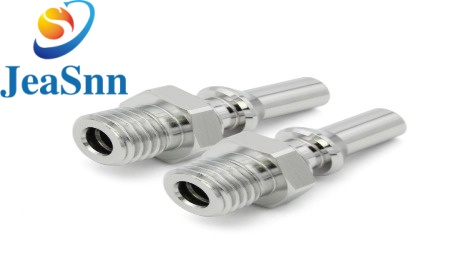
Precision threads are parts in custom CNC-machined metal parts. From threaded shafts and aluminum housings to stainless steel fittings, bushings, and industrial fasteners, precision threads keep assemblies and fastening products' performance steady.
However, to make precision threads, you need more than the cutting tool. The Material, the thread specifications, how the hole is prepared, the machining method, and the inspection steps all affect the outcome. For companies that make custom metal parts, even a tiny thread mistake can cause assembly issues, product rejections, and higher production costs.
This guide shows how to machine precision threads in custom CNC metal parts, compares threading methods, shows how to avoid manufacturing defects, and tells you how to design threads that save money.
1. What Are Precision Threads in CNC Machining?
Precision threads are features manufactured to specified dimensions, profiles, and tolerances. Precision threads allow mechanical components to connect, fasten, adjust, or form interfaces.
In custom CNC Machining, precision threads are commonly used in:
- Custom CNC machined aluminum housings
- Stainless steel threaded fittings
- Precision threaded studs
- CNC machined bushings and sleeves
- Custom screws, nuts and fasteners
- Industrial mounting brackets
- Hydraulic and pneumatic components
- Automotive and automation equipment
There are two primary types of threads.
Internal threads are located inside a hole. Receive a mating screw, bolt, or threaded component. Internal threads are commonly produced through CNC tapping or thread milling.
External threads are located on the outside of a component, such as a custom shaft, stud, or connector. External threads can be produced using CNC thread turning, thread milling, or other suitable methods.
Thread accuracy affects assembly fit, load transfer, fastening reliability, and, in applications, sealing performance. Therefore, precision thread machining must be considered a part of the overall manufacturing process.
2. Key Factors Affecting Thread Machining Accuracy
2.1 Material Selection
Metals behave differently when cut. Each metal has its cutting characteristics, strengths, and ways it may deform while being machined. Aluminum 6061 is widely used for custom CNC machined parts because the machinability of Aluminum 6061 is excellent. It is very versatile. However, the low stiffness of Aluminum 6061 compared to steel means that extra care is needed when machining walls or small threaded features. Stainless steel 304 and stainless steel 316 provide corrosion resistance. They can bring challenges such as work hardening, heat generation, and higher cutting forces. Brass is suitable for precision fittings and threaded connectors because many grades of Brass have good machinability. Carbon steel and alloy steel may be preferred when higher strength or specific mechanical properties are required. Choosing the metal improves thread quality, reduces tool wear, and helps achieve the intended performance.
2.2 Thread Specifications
Before machining begins, the thread specification must be clearly defined.
Important parameters include:
Thread standard, such as metric ISO or Unified inch threads
Nominal diameter
Thread pitch
Thread tolerance class
Internal or external thread type
Required thread depth
Surface treatment requirements
For example, an M6 × 1 thread has a nominal diameter of 6 mm and a pitch of 1 mm. However, the nominal size alone does not define the complete manufacturing requirement. The tolerance class and usable thread depth may also be critical.
For custom CNC metal parts, complete thread specifications reduce ambiguity and help prevent assembly incompatibility.
2.3 Tool Condition and Alignment
Worn tools can cause problems. Excessive runout and wrong tool alignment also lead to issues. These problems result in dimensions, rough thread surfaces and results that are not consistent. Small taps are especially at risk of breaking. This happens when cutting forces get too high or when chips get stuck and can’t escape. Inspecting tools often is important. Choosing the tools matters. Setting up the machine accurately is also key. All of these steps help ensure precise thread machining every time.
2.4 Workholding and Part Rigidity
Thin-wall housings, sleeves, and lightweight brackets can bend under much clamping pressure. If the workpiece shifts or changes shape while it's being machined, the thread will not be in the right place. The finished thread might end up out of tolerance. Using fixtures helps keep things stable. Soft jaws protect the part. Applying the right amount of clamping pressure is necessary. These measures support dimensions during CNC machining.
3. Common Methods for Machining Precision Threads
The best way to make threads is based on the material, the thread details, the shape of the part, how many pieces are needed, and the required accuracy. Four main ways are CNC tapping, thread milling, thread forming, and thread turning, each with its good points and bad points.
CNC tapping uses taps to make threads in holes that have been drilled first. It works well for metric and inch threads in aluminum, steel, and stainless steel. Getting the hole right using the taps at the right speed, the right lubrication, and controlling the chips is very important. Extra care is needed for holes that're not through, and this method gives good repeatable results for making many threads.
CNC thread milling uses a path to make threads. This method has force on the tool, can fit different sizes, and has fewer chances of the tap breaking, making it good for big threads, hard materials, and parts with thin walls. The downside is that it takes longer and needs complicated programming.
Thread forming changes the shape of the material into cutting chips. It makes threads but needs material that can be shaped into the right-size hole and a lot of force, so it is not good for all thin-wall designs.
CNC thread turning is good for threads on round parts like shafts and sleeves. It can do threading, outer diameter machining, and grooving on a lathe. If the part is not held right or the tool is not in line, it can damage thin sleeves and mess up the thread shape.
4. How to Design Custom Metal Parts for Accurate Threads
Good threads start with a design that is easy to make. Using design for manufacturing principles helps engineers reduce hard-to-machine parts and makes the making of threads more consistent.
4.1 Choose Standard Thread Sizes
Standard metric and UN threads are easier to make and check compared to custom thread types. Custom pitches or special thread shapes often need tools, custom programming, and special checking tools. If it works, using thread sizes lowers costs and makes it easier to get spare parts.
4.2 Decide on the Right Thread Depth
The depth of the thread affects how well it works, how long it takes to make, and how much it costs. If the thread is too deep, it asks more from the tools. From removing the chips. If the depth is more than needed, it doesn't help much. For holes that aren't through, make sure the total hole depth and the actual thread depth are different, leaving space for the tool and the chips. The final depth should be based on the type of fastener, the material, the load, and the design goals, not just general rules.
4.3 Leave Enough Material Around the Thread Holes
If the thread hole is close to the edge of the part, there may not be material to hold the load. This can cause cracks, deformation, or the threads to break in thin walls. If the edges are not enough, ways to fix this include making the wall thicker, adding a part to hold the thread, moving the hole, or using a threaded insert.
4.4 Use Threaded Inserts When Needed
Threaded inserts make the threads stronger for soft materials when the parts are taken apart often or when there is a heavy load. But inserts need space to fit and support, so they are not always possible on thin parts. Designs need to follow the size, how to put it in, how much load it holds, and the supplier rules.
4.5 Write Thread Details on the Drawings
A 3D CAD file alone doesn't show all thread details. The 2D drawings should say the thread standard, the size, the pitch, the tolerance, the depth, the angle for the start, and the finish. For custom parts, make sure the CAD file and the 2D drawing are the version to avoid mistakes.
5. How to Prevent Common Thread Machining Issues
Thread problems cause waste, delays, and poor part performance. Some common issues and how to fix them are listed here.
Broken taps often happen because the hole is the wrong size, the force is too much, the tools don't match, the tools are not lined up, or the chips are stuck. Check the hole size, use the taps, set the cutting correctly, and help the chips go out. If tapping is risky, try thread milling
Threads that are not the size happen because the tools are worn, the programming is wrong, the machine is not in line, or the part is bent. Check the tools, use holders, and check after machining.
Burrs and damage at the start of the thread happen because the cutting is not steady, the tools are worn, or the burrs are not removed properly. Add an angle at the start and use gentle cleaning to protect the first thread.
Not enough thread depth happens because the hole is not deep enough, the edge is cut too much, the walls are thin, or the drawings are not clear. Mark the usable depth and make sure there is enough material to take the load.
For walls, the part can bend because of too much pressure and strong cutting. Use holders, balance the material removal, and check after the part is free to control this bending.
6. Custom CNC Machining for Precision Threaded Metal Parts
Making threads needs the right mix of design, tools, how the part is held, the way it is machined, and how it is checked.
For companies that need custom CNC machined metal parts, working with a machine shop helps spot problems early, makes it easier to make the parts, and lowers costs.
CNCPartschina.com helps customers who need custom CNC metal parts for mechanical uses. Whether you need threaded aluminum boxes, stainless steel connections, precise shafts, Custom Bushings, mounting brackets, or other parts, having clear details is important for the project to go well.
When you ask for a quote, give your engineering drawings, CAD files, the material you want, the thread details, how many you need, and when you want it. These details help plan how to make and check your parts.
Looking for a supplier for custom CNC machined metal parts? Send your drawings and details to CNCPartschina.com at engineer@cncpartschina.com or 8618998057602 to get a quote and talk about your thread machining needs.