


 English

As tool fasteners, thumb screws make it easy to adjust and remove things quickly. They are different from machine screws that need screwdrivers. Their special heads can be tightened by hand. Common places where they are used include machines, light fixtures, electrical boxes, medical tools, car parts, power tools, and 3D printer parts.
For companies and design engineers, custom thumb screws offer more flexibility than regular store-bought fasteners. The size of the head, the pattern on the head, the thread size, the total length, and the Material used can all be changed to fit design needs.
Compared to standard fasteners, custom thumb screws give more options to designers and manufacturers. We can change the head size, the pattern on the head, the thread type, the length, and the material to match your product needs.
JeaSnn provides custom screws, CNC machined metal parts, precision shafts, bushings, and other hardware. Our CNC turning and milling services help with OEM and ODM projects from test runs to large-scale production.
This guide shows you how to pick the thumb screw head, compare different knurl patterns, choose the right material, and optimize your design for CNC precision machining.
1. What Are Thumb Screws and How Do They Work?
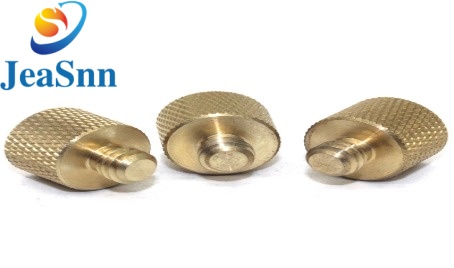
A thumb screw is a manually actuated fastener equipped with an enlarged or geometrically modified head to provide adequate gripping surface for manual engagement and disengagement.
The majority of thumb screws are composed of three basic segments:
Head: The gripping section that allows users to apply manual torque.
Shank: The cylindrical body connecting the head to the threaded section.
Thread: The external helical profile that meshes with threaded holes, nuts, or other matching parts.
Thumb screws may come with shoulders, washers, captive designs or custom thread lengths to suit different uses.
Thumb screws stand out for their great convenience. Users can remove equipment covers, adjust brackets, lock panels and replace components without any tools.
This makes custom thumb screws particularly useful in products requiring frequent adjustment, maintenance, or component replacement.
2. Thumb Screws vs. Standard Machine Screws
Even though both types share the basic purpose of fastening, each has a design that suits a different goal.
| Comparison | Thumb Screw | Standard Machine Screws |
| Installation | Usually tightened by hand | Usually require a tool |
| Main advantage | Convenient adjustment | Controlled tool-assisted fastening |
Typical applications | Removable covers, fixtures, equipment panels | Permanent or semi-permanent assemblies |
| Customization | Head diameter, knurling, grip and threads | Head style, drive type and threads |
Thumb screws are ideal for tasks that need access and frequent adjustment. Conventional machine screws are better when the main concern is the amount of torque needed for installation, size, or higher clamping force.
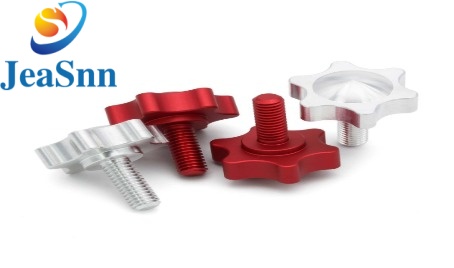
3. Common Thumb Screw Head Styles
The head plays a key role for thumb screws. It affects grip comfort, applicable hand torque, and mounting space. Different head designs cater to different usage scenarios.
Textured knurls around the head perimeter boost finger friction. It is a common fastener that is tightened by hand, making it easy to adjust without any tools again and again. Engineers can choose measurements for the head diameter, how deep the knurl is, and how close the knurls are together. It is used a lot in machines, electronic parts, camera equipment, light setups, and things that can be adjusted.
3.2 Slotted Thumb Screws
This dual‑configuration design allows manual tightening. It has an integrated straight‑drive slot for a flat‑blade screwdriver to give extra torque. This dual‑configuration design is good for tight, hard‑to‑reach spots that need both tool help for fastening. Slot dimensions are tightly controlled during CNC Machining.
3.3 Phillips Thumb Screws
These have a cross recess for screwdriver access while supporting manual operation. They are widely applied on electrical devices, consumer goods, instrument panels, and mechanical assemblies. Design must reserve enough material around the cross cavity.
3.4 Hex Head Thumb Screws
Six-sided heads supply multiple gripping faces. They can be turned by hand or wrenches, suited for jigs, equipment covers and applications requiring more controlled torque. Hex geometry delivers a different trade-off among grip, clearance and torque versus round knurled types.
3.5 Wing Thumb Screws
Two outward wings create extra leverage for hand tightening. They are popular on adjustable brackets, removable guards, lighting and service panels. Wing size must balance grip and space; overly large wings risk collision with adjacent parts.
3.6 Customized Thumb Screw Heads
When standard styles fail to meet requirements, we offer custom geometries: oversized round, low-profile knurled, narrow grip, modified wing, polished decorative heads and custom sizing. OEM custom heads match your equipment’s structure, look and assembly needs.
4. Choosing the Best Material for Custom Thumb Screws
The material you choose for custom thumb screws plays a role in how strong they are, how much they weigh, how well they resist rust, how they look and how much they cost to make. JeaSnn makes custom thumb screws from a range of materials including aluminum, brass, stainless steel, carbon steel, titanium, and engineering plastics. For low-load situations or applications that need insulation, plastics are a choice.
- 303 stainless steel is great for CNC turning.
- 304 Stainless steel is best for industrial uses.
- 316 Stainless steel has molybdenum added, which gives it resistance to chloride corrosion. This makes it ideal for outdoor environments and medical hardware.
Be careful about thread galling. Make sure the material can handle the corrosion risks in the environment where it will be used.
Aluminum is light and easy to machine. Can be anodized to get custom colors.
- 6061 Aluminum is a good all-around choice for most applications.
- 7075 Aluminum is stronger and used when higher strength is needed.
It’s commonly found in lighting, portable gear, and camera accessories.
Brass machines well, conducts electricity well, and has a nice finish.
It’s a fit for electrical setups, instrument panels and decorative fasteners.
Carbon steel offers strength at a lower cost.
You can add zinc, nickel, or black oxide coatings to help protect it from corrosion. It’s often used in jigs and machinery.
Titanium has a high strength-to-weight ratio and resists corrosion well.
It’s perfect for aerospace and high-performance equipment. It’s expensive and harder to machine.
Engineering Plastics (Nylon, POM, PEEK)
These plastics are non-conductive and lightweight, making them ideal for electronics with load requirements.
Before choosing, check the temperature limits and how much they might creep under pressure. How well the threads will hold up.
Pick your material by considering the clamping force needed, the working environment, weight limits, and your budget.
5. Applications of Custom Thumb Screws Across Industries
Custom thumb screws are used in products that need tuning, frequent access, or easy part replacement. Custom thumb screws come in sizes and materials so they fit many industrial and commercial fields.
CNC & Industrial Machinery: Custom thumb screws secure guards, adjustment jigs, inspection lids, and positioning brackets, allowing tool‑free servicing. Custom thumb screws made from carbon steel are chosen based on load demands.
Lighting Equipment: Custom thumb screws with aluminum bodies are chosen for aesthetic lighting housings and adjustable mounts. Brass and stainless steel Custom thumb screws are also offered. Design priorities for Custom thumb screws include head profile, surface finish, thread engagement, and resistance to the environment.
Electrical Equipment: Custom thumb screws made of brass suit conductivity needs for housings and access covers. Custom thumb screws made of steel and aluminum handle general fastening. For Custom thumb screws, insulation, grounding, and temperature limits must be considered when choosing the material.
Medical Devices: Steel-based custom thumb screws provide corrosion resistance and ease of cleaning for maintainable medical assemblies. Such fasteners are not pre-qualified for medical certification. All design parameters must adhere to your validation specifications.
Automotive Parts: Custom thumb screws are deployed on mounting brackets and service panels. Substrate options include aluminum, stainless steel, and carbon steel. Material selection shall account for vibration, thermal cycling, corrosion exposure and loosening hazards.
Power Tools & CNC Routers: Custom thumb screws are integrated into grips, safety guards, and guide assemblies to facilitate adjustment and routine servicing. Custom thumb screws are designed with geometry that fits the space.
3D Printers & Electronics: Custom thumb screws made of aluminum give weight to frames and panels, while Custom thumb screws made of stainless steel provide ruggedness. Custom thumb screws, with custom threads and dimensions, fit perfectly with existing assemblies.
6. Precision Manufacturing Processes for Custom Thumb Screws
The machining workflow ensures that thumb screws meet size, function, and look standards. CNC turning is the step for making round shanks, threads, and heads. It is followed by steps for more complex shapes.
CNC Turning: The rotating workpiece is cut to make the head, shank, threads, shoulders, chamfers and grooves. CNC turning gives tight and repeatable tolerances and a smooth surface on aluminum, brass, stainless steel, and carbon steel thumb screws.
CNC Milling: This extra step makes flat surfaces, slots, drive recesses, and custom hex heads. By combining turning and milling, we can create thumb screws with custom designs.
Thread. Rolling: Thread cutting removes material to create threads and can follow any thread specification for most metals. Thread rolling presses metal to shape threads, giving thread strength when the metal and design allow it. Choosing the method depends on the metal, thread shape, how many pieces are made, and the intended use.
Knurling: Knurling tools make straight diamond or other grip patterns. The depth, spacing, and evenness of the knurl are carefully controlled. We inspect to take out burrs and sharp edges.
Surface Treatment: Surface treatments make thumb screws look good, stop rust, and resist wear. Finish options include aluminum anodizing, polishing, zinc plating, nickel plating, black oxide, and stainless steel passivation. We must pick a coating that works with the thumb screw material and the service environment.
7. DFM Tips for Designing Custom Thumb Screws
DFM helps your thumb screw meet functional needs with efficient CNC Machining. Review these points before sending drawings to the manufacturer.
Choose a suitable head diameter: balance hand torque, mounting space, appearance, and cost. Do not use extra-large heads unless required.
Optimize head thickness: reserve enough material for slot or Phillips recesses. For knurled heads, make sure the structure can support the knurl design.
State thread parameters clearly: note metric/inch standard, diameter, pitch, length, tolerance, and engagement. Confirm compatibility when matching custom nuts or inserts.
Select suitable shank length: match the thickness of stacked parts. Too little thread causes weak engagement; excess length risks collision with nearby parts.
Minimize redundant complex features: standard threads and simple geometries cut machining time. Supply clear drawings if special features are mandatory.
Specify surface finishes: account for coating thickness. Anodizing and plating alter dimensions and thread fit, which must be compensated during machining.
Apply sensible tolerances: reserve tight tolerances only for critical features like threads and mating contact surfaces. Overly restrictive tolerances drive up production costs without bringing any functional benefit.
Take manual operating conditions into account: evaluate finger clearance, edge radius, knurl sharpness, and how often the screw will be adjusted. Anti-loosening designs should be incorporated where vibration risks loosening.
8. Custom Thumb Screw Manufacturing at JeaSnn
JeaSnn (Jiesheng Hardware) is an OEM & ODM precision metal parts maker with over 20 years of experience. We provide CNC turning, milling, and automatic lathe machining for custom thumb screws, bolts, nuts, shafts, bushings, and standoffs.
We produce thumb screws per your drawings, CAD files, or samples. Available materials cover aluminum, stainless steel, brass, alloy steel, titanium, and engineering plastics. Customizable styles include knurled, slotted, Phillips, hex and wing heads, with metric/inch threads, custom dimensions and varied surface finishes.
Certified to ISO 9001:2015 and IATF 16949:2016, we offer DFM guidance and support for prototypes, small runs, and mass production. We serve lighting, electrical, medical, automotive, machinery, and 3D printer industries. Reach out for tailored thumb screw solutions.
Contact JeaSnn – Custom Thumb Screw Manufacturer
Company: Dongguan Jiesheng Hardware Industry Co., Ltd. (JeaSnn)
Email: engineer@cncpartschina.com
Website: https://www.cncpartschina.com/
Request a Custom Quote: Send your drawings, CAD files, material specifications, and estimated order quantity to our engineering team. We will help you evaluate your design and develop a suitable custom thumb screw manufacturing solution.