



 English

Aluminum CNC milling ranks among the most prevalent manufacturing techniques for creating lightweight, high‑precision, and long‑lasting metal components. Custom aluminum parts — ranging from straightforward brackets and enclosures to sophisticated mechanical assemblies — can be fabricated with close tolerances, premium surface quality and uniform repeatability across batches.
Selecting a suitable aluminum alloy and proper machining procedure is merely the starting point for product designers, engineers and procurement specialists. Numerous variables, such as Material choice, CNC tolerance specifications, surface treatment options, part geometry, production quantities and inspection criteria, will all influence the end‑use performance and overall cost of your custom components.
This guide to aluminum CNC milling breaks down the critical considerations when sourcing custom CNC aluminum parts, covering material grades, tolerances, surface finishes, machining workflows, real‑world applications and cost drivers.
If you are in search of a supplier for custom CNC‑machined aluminum components, familiarity with these key aspects will also help you compile a more precise RFQ, as well as prevent avoidable manufacturing‑related expenses.
1. What Is Aluminum CNC Milling?
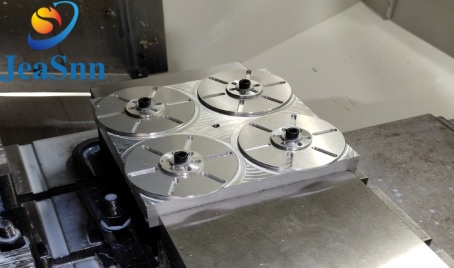
Aluminum CNC milling falls under subtractive manufacturing: computer‑governed cutting tools strip away excess material from aluminum stock to shape workpieces into targeted part geometries.
Distinct from manual machining operations, CNC milling follows pre‑programmed tool trajectories to govern multi‑axis cutting motions. This capability enables repeatable dimensional output for custom aluminum parts, whether your designs are basic or highly intricate.
A broad spectrum of items can be fabricated via aluminum CNC milling, including aluminum brackets, CNC‑machined aluminum housings, precision aluminum shafts, aluminum plates, mounting hardware, mechanical connectors, heat sinks, sensor casings, electronic enclosures, automotive and robotics components, custom fixtures, prototype pieces, as well as parts for low‑volume production.
Aluminum stands out as a highly desirable material for customers sourcing custom CNC parts. It brings together low weight, favorable machinability, natural corrosion resistance, and cost‑competitive machining expenses.
2. Why Choose Aluminum for Custom CNC Parts?
Excellent Machinability
Compared with steel and other harder metals, aluminum offers superior machining performance. CNC cutting tools can remove stock at high efficiency, shortening machining cycles for most part designs. This advantage proves especially valuable for custom aluminum components featuring complex geometries or those needed in larger batch sizes.
Light‑Weight Performance
Aluminum features far lower density than steel. For use cases prioritizing weight savings, CNC‑machined aluminum parts deliver an optimal strength‑to‑weight balance. It is therefore a preferred choice across robotics, automotive assemblies, aerospace hardware, electronic devices, automation machinery, and consumer‑grade products.
Consistent Corrosion‑Resistant Properties
A thin protective oxide layer forms spontaneously on most aluminum alloys, defending the base metal from corrosion. Post‑processing surface options including anodizing offer additional improvements in appearance, wear resistance and anti‑corrosion performance.
High‑Quality Surface Finish Potential
When paired with suitable cutting parameters and cutting tools, aluminum yields smooth, visually appealing as‑machined surfaces. For custom parts with exposed cosmetic surfaces, additional finishing options including anodizing, polishing, bead blasting, and powder coating are also available.
Cost‑Effective Production
Aluminum is a comparatively cost‑efficient option to machine versus numerous high‑strength engineering metals. Its favorable machinability minimizes tool abrasion and cuts down processing time, helping bring overall manufacturing expenses down.
3. Common Aluminum Alloys for CNC Milling
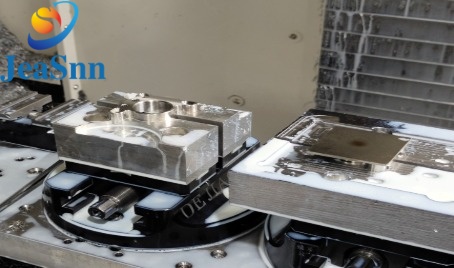
Aluminum alloys exhibit considerable performance variations when processed via CNC milling. Your alloy selection should account for target mechanical strength, machinability, corrosion resistance, intended surface finish, and the end‑use demands of the finished part.
6061 Aluminum
6061 is among the most popular alloy choices for custom CNC‑machined aluminum components. It balances strength, cutting performance, corrosion resistance and weldability, while remaining cost‑effective and compatible with numerous surface finishing treatments.
This alloy is widely utilized for manufacturing brackets, frames, housings, machine parts, fixtures and various general‑industry components. For purchasers looking for an economical material for precision CNC Aluminum Parts, 6061 is a reliable first‑choice solution.
7075 Aluminum
Offering greater mechanical strength than 6061, 7075 aluminum is the preferred option for heavy‑duty structural applications. Its exceptional strength‑to‑weight property makes it ideal for aerospace, motorsport, robotics, and high‑performance mechanical assemblies. Keep in mind that 7075 carries a higher price tag relative to 6061, meaning it is not always required for every custom‑produced part.
2024 Aluminum
Renowned for high tensile strength and excellent fatigue resistance, 2024 aluminum sees heavy deployment in aerospace‑related projects. If you opt for 2024 for CNC milling work, special attention should be paid to your corrosion protection standards and surface finishing specifications.
5052 Aluminum
5052 features solid corrosion‑resistant properties and is primarily applied to sheet‑metal work as well as parts that demand excellent formability.
When it comes to CNC milling projects, the optimal alloy grade is determined by your unique part geometry and functional performance demands.
4. Aluminum CNC Milling Tolerances
Tolerance is one of the most important considerations when manufacturing precision CNC parts.
Standard vs. Tight CNC Tolerances
For general custom CNC Machining, many non-critical dimensions can use standard machining tolerances.
Tighter tolerances should be reserved for critical features such as:
Bearing bores
Shaft diameters
Mating holes
Precision mounting surfaces
Gear locations
Critical assembly dimensions
Alignment features
For example, if a hole only provides clearance for a screw, an extremely tight tolerance may provide little practical benefit.
On the other hand, if a precision shaft must fit into a bearing, the dimensional tolerance may need to be much tighter.
Why Tolerance Affects Cost
Tighter tolerances can require:
Additional machining operations
More accurate tooling
Better workholding
Multiple inspections
Temperature control
Tool wear monitoring
Secondary finishing
CMM measurement
Therefore, one of the best ways to reduce the cost of precision custom parts is to specify tight tolerances only where they are functionally necessary.
5. What Affects Aluminum CNC Milling Cost?
The overall cost of CNC-machined aluminum components is not solely determined by raw material prices, but governed by a combination of multiple manufacturing factors.
Part Geometry
Complex part geometries drive up manufacturing costs by demanding extra programming work, specialized tooling, repeated machine setups, and longer machining cycles. Intricate structural features including deep pockets, thin walls, tiny holes, complex contours, undercuts and elaborate internal structures all contribute to higher production expenses.
Material Grade
Aluminum alloys differ in both raw‑material costs and machining behavior, and these differences play a key role in total production expenditure. For most general‑purpose applications, 6061 aluminum offers solid value for money, while high‑performance alternatives including 7075 aluminum come with greater material and processing‑related expenses.
Dimensional Tolerances
Tighter tolerance standards raise the difficulty of CNC Machining and require more rigorous inspection procedures, which directly increases production costs. To control the budget for custom CNC parts, it is advisable to avoid over-specifying ultra-precise ±0.01 mm tolerances on non-critical features and only apply tight tolerances where functionally necessary.
Surface Finishing Treatments
Post-processing surface treatments incur additional secondary processing fees. Common value-added finishes such as anodizing, bead blasting, polishing, powder coating, and plating will further raise the total manufacturing cost of aluminum parts.
Production Quantity
Production volume is a decisive factor affecting the unit cost of custom parts. One-off prototypes and single-piece custom components have a higher unit price, as fixed programming and machine setup costs are spread over a minimal number of products. In contrast, increased production volume effectively lowers per-unit costs. This cost flexibility makes CNC milling ideal for diverse production needs, ranging from one-time prototypes, custom replacement parts, and small-batch runs to medium-volume and mass production of standard components.
Inspection and Quality Requirements
General industrial components only require standard routine inspection with no extra charges. However, parts that demand high-precision CMM detection, detailed dimensional inspection reports, official material certification, or professional specialized testing will generate additional quality assurance costs.
6. How to Reduce the Cost of Custom Aluminum CNC Parts
You can achieve favorable pricing for custom aluminum CNC‑machined components without compromising functional performance by adopting the following design‑optimization practices.
Eliminate Over‑Specified Tight Tolerances
Reserve precise tolerance values exclusively for dimensions that serve critical functional purposes. Refrain from applying tight tolerances to non‑essential features.
Simplify Deep Cavity Features
Deep pockets call for extended‑length cutting tools, which compromise machining stability and extend cycle time. Whenever feasible, design pockets with reasonable depth‑to‑width ratios.
Leverage Standard‑Size Cutting Tools
Design internal corner radii to match widely available standard cutting tools. This removes the need for costly custom‑specialized tooling.
Minimize Ultra‑Thin‑Wall Structures
Thin aluminum walls are susceptible to vibration and part distortion during CNC milling, making accurate machining challenging. Boost wall thickness wherever application requirements allow to enhance overall manufacturability.
Cut Down Required Machine Setups
Part geometries that can be completed with fewer machine re‑orientations help lower labor expenditure and time spent on workpiece alignment.
Choose Appropriate Surface Finishes
Skip high‑end cosmetic surface treatments for internal or hidden components that will not be exposed in final use.
These seemingly minor design adjustments can bring about substantial savings on the total cost of custom metal parts.
7. Why Work With an Experienced Custom CNC Machining Supplier?
The quality of CNC-machined aluminum components relies far beyond advanced CNC equipment. It also hinges on a supplier’s engineering expertise, professional process planning, precise tooling selection, rigorous inspection standards, and systematic quality control protocols.
A seasoned custom CNC machining supplier offers comprehensive technical evaluation covering every key project link, including material grade selection, optimized CNC milling strategies, reasonable tolerance definition, matched surface finishing solutions, professional DFM optimization, production volume planning, standardized inspection methods, customized packaging and tailored delivery arrangements.
For enterprises sourcing custom aluminum CNC parts, this professional engineering guidance is equally vital as high-precision machining equipment, laying a solid foundation for stable part quality and cost-effective production.
At CNC Parts China, customers only need to submit part drawings and technical specifications for custom CNC machining projects. Our team conducts in-depth manufacturing assessments based on part geometry, material properties, tolerance demands, production quantity, surface finish standards, and practical application requirements.
Whether your project requires one-off prototype fabrication, small-batch custom aluminum part production, or continuous mass manufacturing of precision CNC components, our drawing-based quotation service delivers the most optimized and suitable manufacturing solution for your specific needs.
Conclusion: Choose the Right Aluminum CNC Milling Solution
As a versatile manufacturing process, aluminum CNC milling combines high precision, light weight, favorable machinability, long‑term durability, and diverse surface finishing possibilities. It can produce parts ranging from basic brackets to complex precision mechanical assemblies, making it a dependable production choice for numerous industry sectors.
That said, proper aluminum alloy selection is merely one step of the customization process. Multiple critical factors jointly determine the final performance and overall cost of custom components, including dimensional tolerances, surface finish standards, part geometry, production volume, inspection specifications, and DFM optimization strategies.
Procurers of custom aluminum CNC parts can achieve optimal project outcomes by balancing functional performance demands with practical manufacturability. This involves eliminating overly strict and unnecessary tolerances, selecting well-matched aluminum alloys, adopting cost-effective surface treatments, and optimizing part designs prior to formal production.
engineer@cncpartschina.com or 8618998057602
If you hold design drawings for custom aluminum workpieces, CNC milled components, precision metal parts, brackets, housings, shafts, or other machined parts, CNC Parts China can provide professional, requirement-based project evaluation tailored to your unique production needs.