


 English

Custom CNC-machined pins are important parts for getting things to fit just right in machines. They make sure parts are in the right place, hold them tight, and help them move the way they should. When regular pins don't work for sizes, Materials, or how well they need to perform, custom CNC Machining is a good way to make what you need. This is a choice for companies that make big machines or equipment.
Choosing the right kind of pin, the right material, how tight it needs to fit, and how it looks on the outside can help companies make better products. This makes the parts last longer. Work the same every time. This guide talks about the kinds of pins that can be made, where they are used, and tips for designing them so buyers can find good metal parts.
1. What Are Custom CNC Machined Pins?
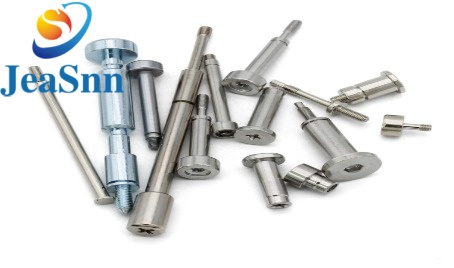
Custom CNC machined pins are parts made with computer-controlled machines. These machines include turning and milling. They help hold parts in place, line them up, connect them, lock them, or guide them in a machine.
Store-bought pins have set sizes. Custom CNC pins are made based on plans, drawings, real samples, or what the job needs. Companies can change the size, how long it is, the shape of the top grooves, threads, holes, what it's made from, and how it looks.
This flexibility works for jobs where regular parts don't fit or work the way they need to.
Key features of custom precision pins:
Made just for you: sizes, lengths, shapes, and special forms.
Accurate fitting: Makes sure everything lines up perfectly when put together.
Many choices of material: steel, aluminum, brass, and special plastics.
Different finishes: Coatings like zinc, nickel, or just polished.
Quality: CNC machines make the same part, over and over.
For companies that make machines, some features can be added to one pin. This means fewer parts and less work when putting things together.
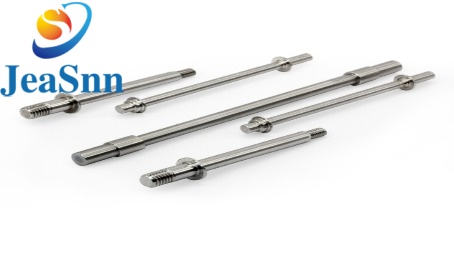
2. Common Types of Custom CNC Machined Pins
Various pin designs deliver mechanical functions. Selecting the pin type boosts connection stability, assembly speed, and long-term operational performance.
2.1 Dowel Pins
As high-precision locating parts, dowel pins secure proper alignment between mating workpieces. They are extensively used for machine casings, molds, fixtures, and CNC fabricated assemblies. Performance stability depends on OD accuracy, straightness, surface condition and bore matching. Bespoke CNC dowel pins are selected when projects require custom sizes, unique materials or interoperability with current machinery to position machine components, mold plates and precision housings. For extreme tolerance specifications, manufacturers combine CNC turning and precision grinding.
2.2 Taper Pins
Taper pins feature progressively reducing diameters. Wedging happens once inserted into matched tapered bores to fix components in position. They are widely used in linkages, shafts, gears, and industrial tooling. Engineers need to define taper ratio, engagement length, and assembly/disassembly rules with mating holes machined to matching specs. They are ideal for assemblies requiring positioning and regular disassembly.
2.3 Shoulder Pins
Shoulder pins have -diameter sections. Their shoulders act as locating faces, pivot supports, or axial stops suited for parts rotating along a fixed axis. Uses cover automation devices, mechanical linkages, robotic structures, and clamping fixtures. Custom versions may add threads, retention grooves, and cross-holes to satisfy assembly demands.
2.4 Threaded Pins
Threaded pins integrate pin bodies with external threads, enabling fastening, adjustment, and removal with nuts and auxiliary hardware. They are selected when standard fasteners fail to meet diameter, length, or load limits. Engineers shall define thread specs and the geometric relation between threads and pin bodies. CNC machining fabricates threads and stepped profiles for automotive and industrial machinery.
2.5. Knurled Pins
Grooves enhance retention while knurled textures raise friction for press-fit installation. They offer holding strength without dependence on threads. Designers must balance groove/knurl shape, substrate material, and pressing force to avoid workpiece damage or loosening. CNC machining tailors these features to match service conditions.
2.6 Pivot and Hinge Pins
Pivot pins serve as rotary supports for hinges, robotic joints, and equipment with cyclic motion. Since they bear mechanical loads and sliding friction during operation, strict control of diameter, bearing length, clearance, hardness and surface quality is essential. Heavy-duty variants employ wear-resistant alloy substrates, heat treatment or specialized surface coatings to boost service life.
2.7 Stepped and Special-Profile Pins
Pins with stepped or custom profiles combine positioning, spacing and locking features into one workpiece, cutting down hardware items and easing assembly work. Cylindrical contours can be formed via CNC turning, while flats, slots and transverse holes are completed by milling and drilling. Complex shapes gain advantages from turn-mill processing, which reduces fixture setups and elevates geometric accuracy of machined features.
3. Materials for Custom CNC Machined Pins
Choosing the material decides how strong the pin will be, how it wears, how it resists rust, how heavy it is, how easy it is to machine, and how much it will cost. The best material is chosen based on the job and the needs. Stainless steel 304 gives a level of rust protection and is easy to machine for normal factory parts. Stainless steel 316 gives protection against salt and harsh chemicals, making it good for marine and chemical plants. Carbon steel is cheap. Works well for everyday fixtures and fasteners. With heat treatment, alloy steel can be very strong. Resists wear for heavy machines and high‑stress joints. Aluminum alloys are light and easy to machine, ideal for robots and lightweight structures. Brass is very easy to machine and conducts electricity well, making it useful for electronic parts. Engineering plastics provide insulation and low friction for non‑metal guides and light assemblies. For use, carbon steel gives a good mix of strength and low cost. Choose steel when you need rust protection, and choose alloy steel for parts that will see a lot of wear or heavy loads. Aluminum makes parts lighter, while brass works well for parts that need to conduct electricity. Engineering plastics can be used. Check the load, temperature, and shape stability carefully. When you order, always specify the material grade; saying just "stainless steel" does not ensure consistent quality.
4. Key Design Tips for Precision Machined Pins
A pin that is properly designed meets the needs it is supposed to handle without making the machining process more complicated than it needs to be and without making the cost too high.
4.1 Define the Correct Diameter and Length
The pin’s outer diameter defines the interference fit, load capacity and positioning accuracy. Its length governs engagement depth, supporting strength and load distribution across mating components. Before releasing engineering drawings, verify the dimensions of mating bores, substrate thickness, projected loads and available assembly clearance. Minor dimensional errors can severely compromise alignment precision. For load-bearing applications, engineers need to evaluate the pin’s performance against shear force, bending stress, bearing pressure and fatigue life.
4.2 Specify Functional Tolerances
If every part of the pin is made to tight measurements, it takes longer to make, more work to check, and costs more money. This does not make the pin work better. Only make the important parts very tight. Those parts include the diameter of the pin, how it fits into the hole, the total length, where the shoulders are, how straight it is, the shape of the holes that go through it, the details of the threads, and how the parts that help it fit together are arranged. Choose the kind of fit and make sure the limits are clear on the drawings. For pins that help position parts, how the hole is made is just as important. If the hole is not made right, even a precise pin will not fit the way it should.
4.3 Design Grooves, Threads and Cross-Holes Carefully
Grooves, threads and cross bores expand the pin’s functional Capabilities yet complicate machining processes. Deep narrow grooves demand dedicated tooling. Cross-holes create stress risers, particularly for pins subjected to heavy loads. Threaded sections diminish the load-carrying cross-sectional area and weaken the component.
Design improvements include avoiding tight grooves and sharp corners, allocating adequate space for cutting tools, specifying thread depth, rationally arranging hole positions, and incorporating lead-in chamfers. An early DFM review detects design flaws prior to manufacturing.
4.4 Consider Surface Finish and Hardness
How rough or smooth the surface is affects how much friction there is, how much it wears, how it fits together, and how it stands up to rust. Smoother surfaces are better for parts that move or slide. For parts that do not need to move, a standard way of making the surface is enough. Heating the pin makes the metal harder and better at handling wear. It can change the size, which usually means more checking and grinding. Choose surface treatments that match the material and the job it will do. For example, a treatment called passivation is good for steel, and plating is good for steel that is not stainless. If a coating changes the size, add that thickness into the calculation for how it fits and how big it is.
4.5 Design for Manufacturability
Sound pin design prioritizes both dependable operation and production practicality. Straight cylindrical pins are readily produced by CNC turning. Pins with flat surfaces, off-center holes, or sophisticated profiles need alternative machining processes. When exceptional dimensional precision is required, grinding operations are added. Consolidating several features into one pin cuts assembly time, yet excessive geometric complexity increases manufacturing duration and overall cost. The primary target is to produce pins that perform as specified at a controlled price point.
5. Applications of Custom CNC Machined Pins
High-precision custom pins enjoy broad adoption across diverse Industries, delivering positioning, fastening, and kinematic alignment for mechanical assemblies.
Industrial Machinery
Within industrial equipment, these pins serve for component location, movable joint connection, tool fixturing, and dynamic part support. Accurate dimensional control and proper material selection ensure stable, repeated machine operation.
Vehicles deploy pins for component positioning, rotational joining, and precise alignment. Custom pin solutions become necessary when designs face space constraints, higher load demands, or specialized material requirements.
Robotics and Industrial Automation
Robots need parts that move in the right way every time. Custom pins that help position parts and turn parts around can help keep things lined up between parts that're important for accuracy.
Medical and Laboratory Equipment
Some medical and lab tools use pins to help move parts to build machines and to make sure parts fit together. These uses might need papers that show what the material is, how the surface is made, and how clean or able to be traced the parts are, depending on what they're used for.
Electrical and Electronic Equipment
Custom pins can act as parts that hold things in place, parts that keep parts apart as parts that hold parts in place, and parts that pass electricity. Different materials like brass, copper, stainless steel, and others can be used depending on how they conduct electricity, how strong they are, how well they resist rust, and how big they are.
Custom Industrial Assemblies
People who make machines often need pins that are not standard to fit special parts or to replace old parts. Custom machining helps make parts the way they need to be without depending only on parts that are already made.
6. Quality Control for Custom CNC Machined Pins
It is very important that the size stays the same because pins often touch parts that are also precise.
You may adopt these quality inspection items for verification:
Dimensional check: Confirm the diameter, length, protruding feature dimensions, and groove locations match drawing requirements.
Fit test: Ensure mating components have correct sizing and achieve the designed assembly fit.
Surface inspection: Check for burrs, scratches, surface smoothness, and other machining imperfections.
Material validation: Confirm correct raw material and complete supporting certification paperwork.
Hardness measurement: Test hardness values for pins engineered for high hardness or long service cycles.
Traceability records: Maintain inspection forms, certificates, and records documenting production and quality checks.
The way to check can depend on what the drawing says and how risky it's. Tools like micrometers, gauges, tools that look at things with light, and machines that measure in three dimensions may be used for parts and how tight the measurements need to be.
For people who buy parts, having rules for what is allowed helps avoid problems when the parts arrive and keeps the quality the same in every group of parts made.
Searching for a trusted supplier of custom CNC machined pins, precision metal pins and other custom-machined components?
Submit your engineering drawings or CAD files, along with specifications for materials, order quantities, tolerances and surface finishes. Our engineering team will assess your requirements and propose tailored CNC machining solutions for your application.
Email:engineer@cncpartschina.com
Get in touch with CNCPartschina.com now to talk about your custom precision parts and request a quotation for your upcoming OEM project.